New real-time X-ray inspection system gets off the ground
By Mike Barton
Public Affairs Specialist
In a process that resembled a technological Lean event, the Rotor Blade X-ray vault at Naval Air Depot Cherry Point was recently renovated to replace aging X-ray equipment and greatly improve safety for technicians.
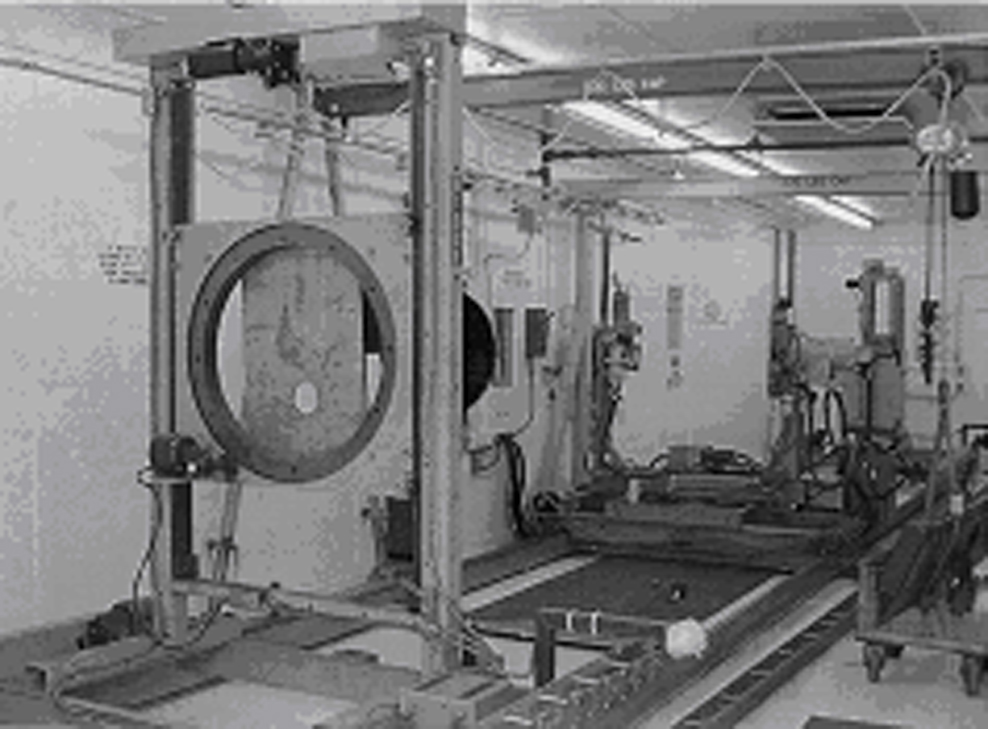
The first full-scale operation of the new system began in building 4275 March 1. The original floor-mounted system, in use there for three decades, presented a continuous challenge for artisans while X-ray equipment traveled on an elaborate configuration of floor-mounted rails. Not only was the technology lagging, there was also an ongoing concern for safety.
According to Marie Ann Ortiz, the Facilities Engineering project manager, this was a complete modernization of the facility. A key improvement is its “real-time” recording capability, which allows state-of-the-art accountability for X-ray inspections. Safety and speed advantages are part of the new radiographic system, as it travels along an overhead gantry system that virtually eliminates the multitude of floor obstructions that were part of the old system. Other safety improvements include an upgrade of the vault’s shielding.
X-ray technicians Chuck Rohweller and Gerry Gould use the facility to perform inspections of helicopter main and tail rotor blades to detect interior defects, cracks and water intrusion; as well as the inspection of metallic components, e.g., control rod ends, aircraft propeller blades and aircraft engine turbine blades. The system is used regularly to inspect helicopter blades and rotors for the H-46, H-53, H-3 and H-60, and is designed to be adaptable for future blade requirements.
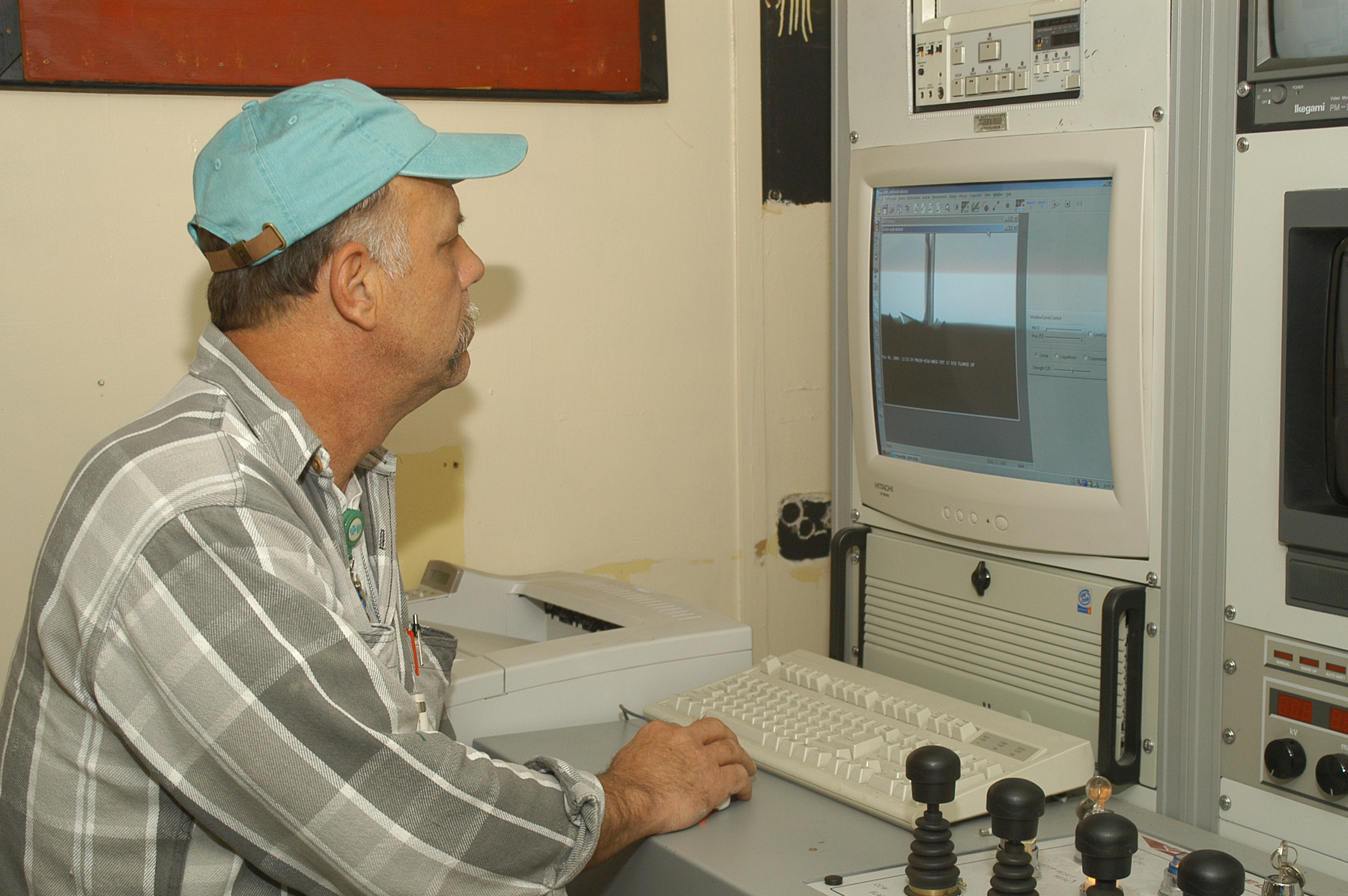
The new detection and imaging equipment can capture and digitize video images for analysis processing, historical referencing and archiving. “We used to record the images to videotape,” says Rohweller. “Now, they are recorded digitally – which allows us to enhance the images, and provides for much easier electronic storage.”
These benefits are not being lost on engineers here who have begun to bring other components to the new facility for engineering inspections. According to Rohweller, the new equipment provides more reliable data in 20 minutes than what used to take all day in the other X-ray lab in building 188, which still uses sheet-film radiographs.
This project was two years in the making, under the direction of Ortiz and Cynthia Gillespie, the equipment project manager. Bill Webster, an electronics engineer, Pat Faulkner, a mechanical engineer, and mechanical technician Chuck Wayman assisted in the project.
-30-
Cutlines:
X-ray before: The X-ray lab prior to the upgrade. (Photo by Marie Ann Ortiz)
X-ray after: The newly upgraded facility is much less cluttered, while offering a much higher quality product to technicians. (Photo by Mike Barton)
Inset (Used here as an inset to Photo 2): Chuck Rohweller examines an X-rayed rotor blade with the new digitized system. (Photo by Mike Barton)