Marine aircraft help certify USS San Antonio for safe aircraft operations
The Navy’s newest amphibious ship, USS San Antonio, is currently undergoing aircraft dynamic interface testing off the coast of Virginia and Maryland as part of the post delivery test and trials period.
These are “'First of Class Tests”' required for each new ship class in order to be certified to operate aircraft. They are intended to evaluate safe operating conditions for aircraft aboard ship, without which USS San Antonio cannot fulfill its mission as an aviation element.
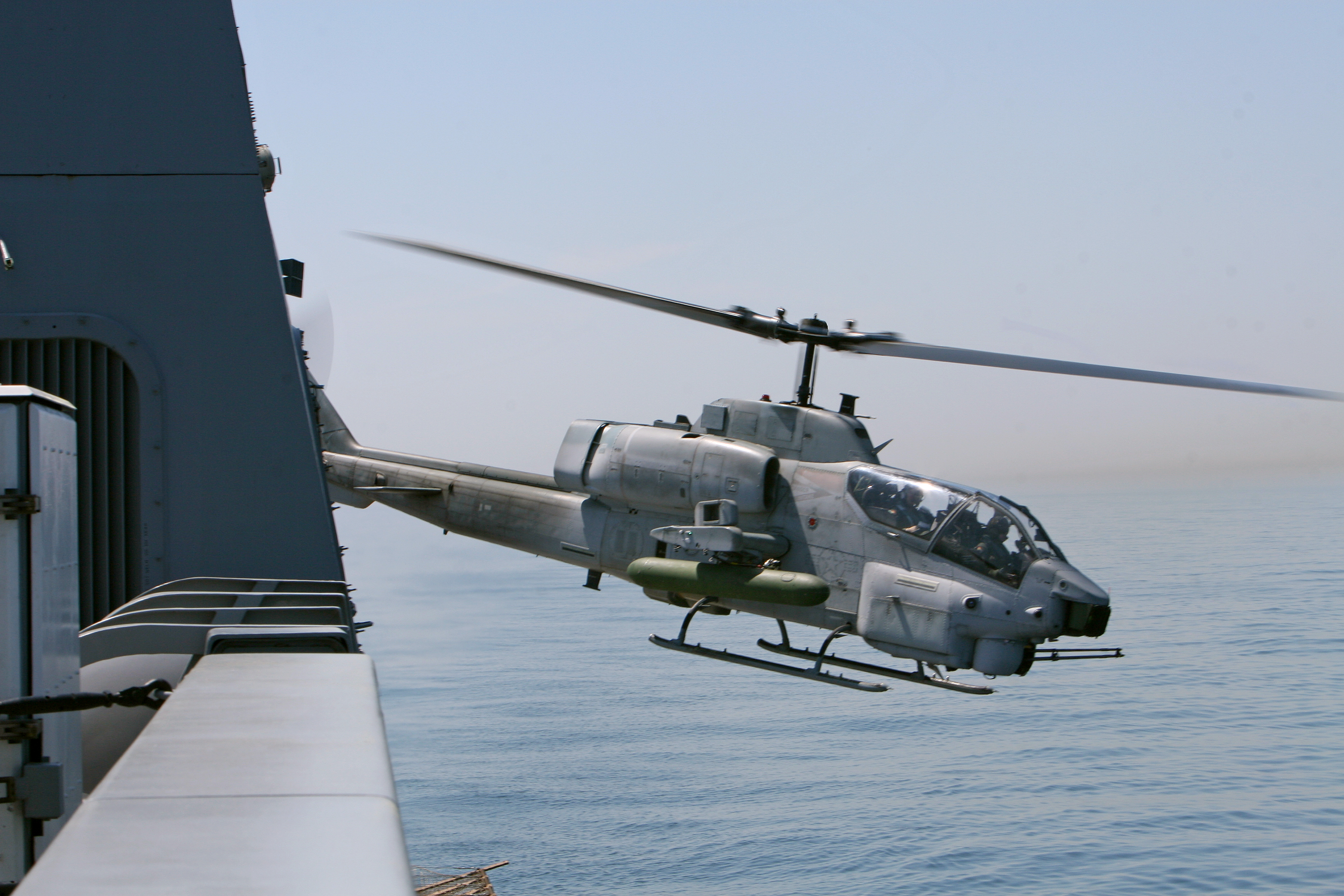
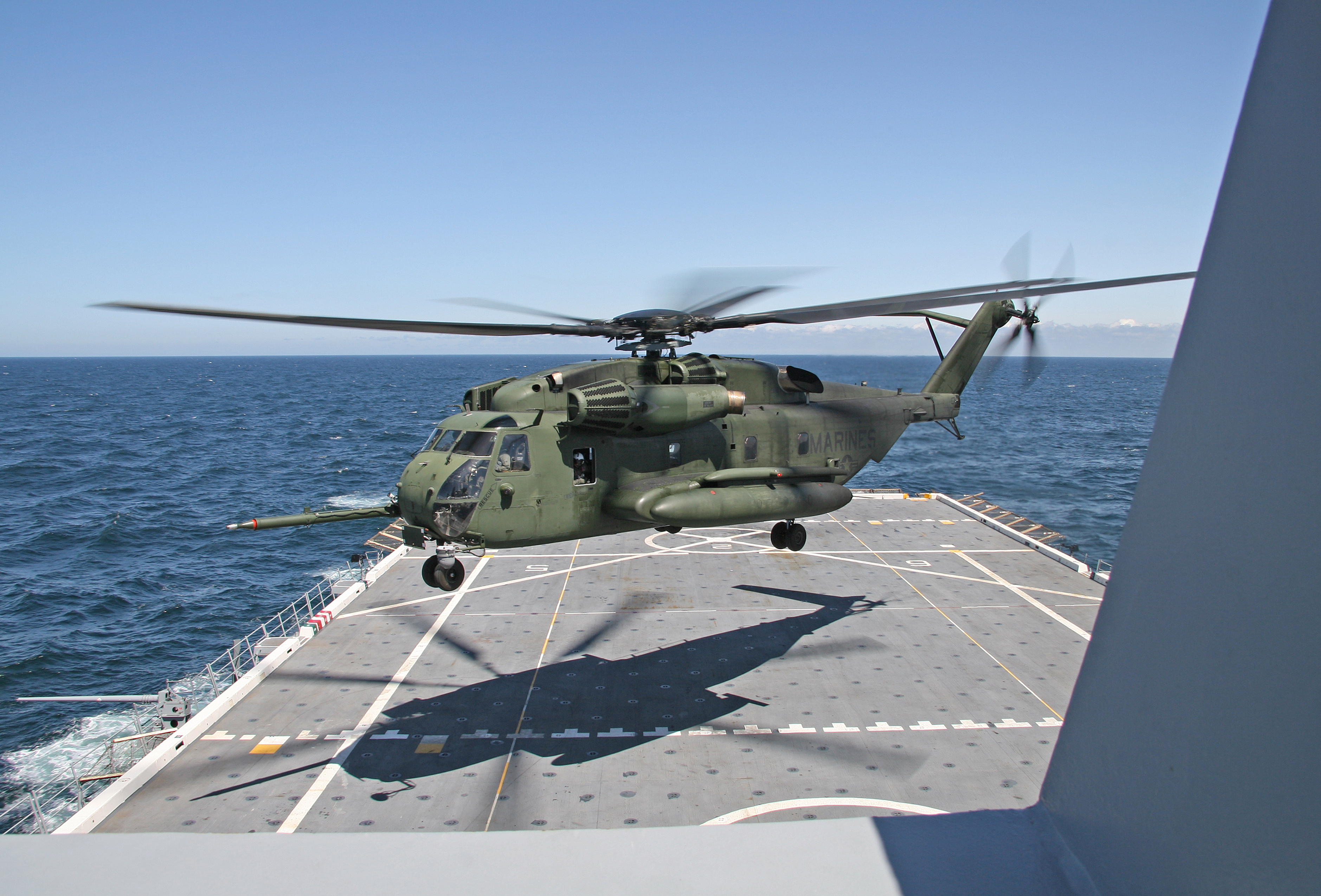
The flight deck of LPD 17 can support the Marine Corps’ largest helicopter, the CH-53E in addition to smaller helicopters such as the CH-46, AH-1W and the UH-1N aircraft. The ship will also launch and recover the MV-22 Osprey tilt-rotor aircraft.
Testing began on Apr. 10 and is expected to conclude in early June with results expected to be released six months after completion of tests.
“Collecting required data from shipboard flight tests from several different types of aircraft onboard USS San Antonio will be used to certify LPD 17 class for safe operating conditions for aircraft aboard the ship,” said John Nelson, LPD 17 ‘First of Class’ Ship Suitability Testing Lead Project Engineer.
The Dynamic Interface Test Team from Air Test and Evaluation Squadron 21 and the Naval Air Systems Command along with various supporting units work together with the ship’s personnel to document the safe limits of relative winds and ship motion as well as flight deck layout, markings, lighting and cockpit visual cues.
Successful dynamic testing yields sufficient data to make recommendations relative to aviation certification of USS San Antonio or recommendations for specific ship or procedural modifications leading to her certification.
In addition to the dynamic interface testing, the use of Marine Corps rotorcraft will help evaluators assess the ship’s hangar, fuel stations and several other aviation facilities.
“This data helps us tell the fleet pilots how to operate safely and also what ship modifications, if any, need to be made for safe consistent flight operations,” said John Nelson.
The USS San Antonio’s ability to support the full range of Marine Corps aircraft will be essential to the class’ requirement to conduct amphibious assault, special operations, or expeditionary warfare missions through the first half of the 21st Century. The ship will be used to transport and land up to 800 Marines, their equipment and supplies, by embarked air cushion or conventional landing craft or Expeditionary Fighting Vehicles, augmented by helicopters or vertical take off and landing aircraft being tested this year.
Additional dynamic interface testing with the AV-8B Harrier is tentatively scheduled for 2007.
###
Photo Caption 1:
Photo by Troy Lancaster
A CH-53E, the Marine Corps’ largest helicopter, landing on the flight deck of USS San Antonio during dynamic interface testing off the coast of Maryland and Virginia.
Photo Caption 2:
Photo by Troy Lancaster
AH-1W helicopter taking off from USS San Antonio’s flight deck during 'First of Class Tests,' which requires each new ship class to be certified to operate aircraft.