First completed “reman” helicopter heads for Texas
By Mike Barton
Public Affairs Specialist
At first glance, it might seem that one of the depot’s newest programs is a complete reversal of the normal work process that is done here. Under this program, a fully-assembled helicopter flies in – and, later, is trucked out in crates.
And that’s exactly how the Marine Corps wants it.
It is all part of the U.S. Marine Corps’ H-1 upgrade program, which teams the depot with Bell Helicopter to remanufacture the existing AH-1W Super Cobra and the UH-1N twin-engine Huey into the AH-1Z and UH-1Y configurations.
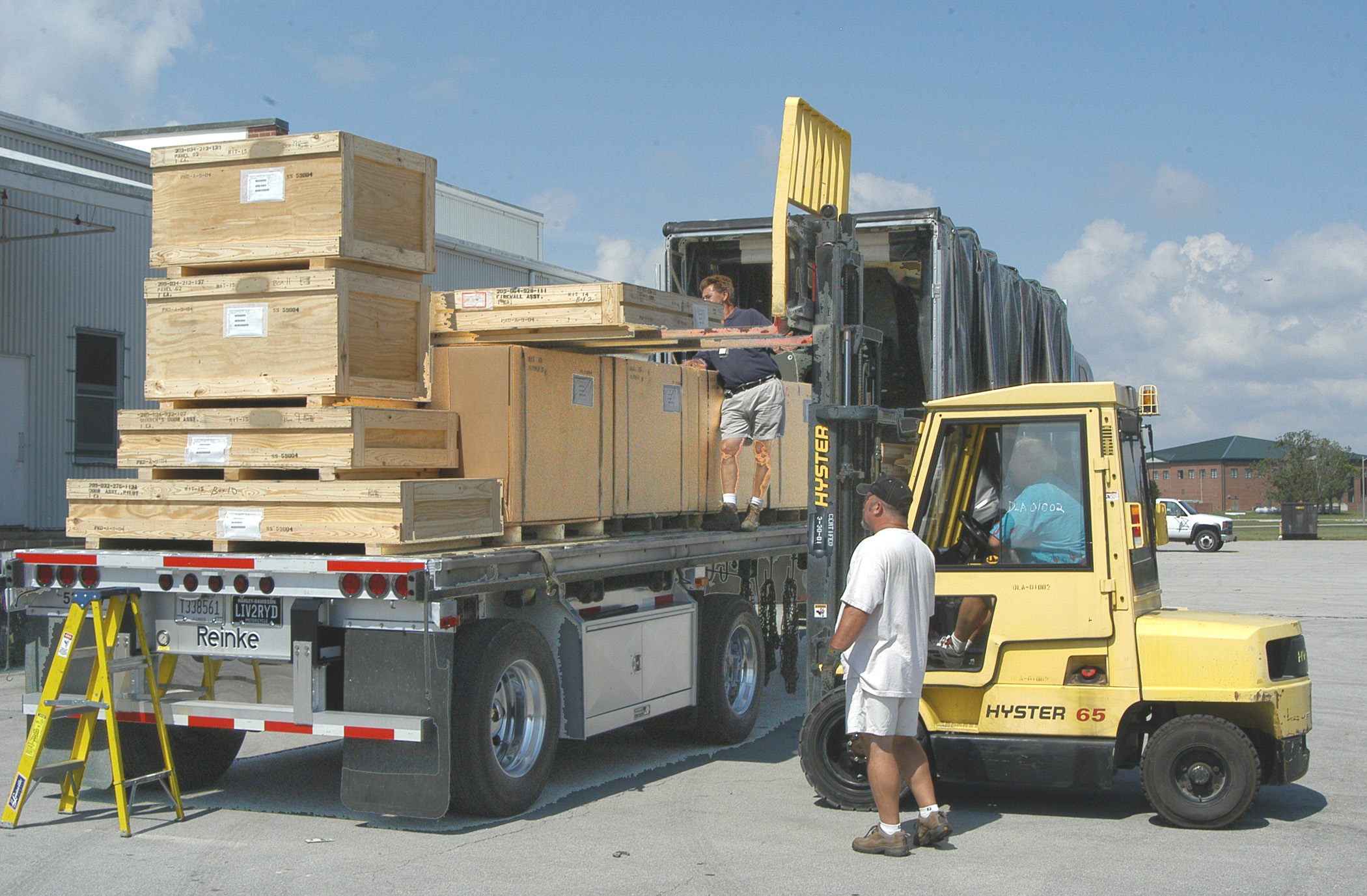
The first completed kit for the H-1 remanufacture program left the depot Sept. 24 on its way to the Bell Helicopter facility in Amarillo, Texas. An AH-1W, which flew in here April 8, was shipped by heavy truck to the Texas plant for transition into the new AH-1Z model.
The “reman” program started with four aircraft last fiscal year, two of each model. Those numbers are scheduled to increase to seven this fiscal year, with additional increases each year until reaching a peak of 46 aircraft in FY 2012. The program is scheduled to run through FY 2015. In all, 100 Hueys and 180 Cobras were originally scheduled for work here.
Initial work on the aircraft was done by artisans from the H-1 Shop, until a new shop was created Oct. 1. Now, due to the growing workload, the H-1/Quick Engine Change shop is handling the reman project. According to Donnie McCall, production supervisor on the reman project, the new shop consists mainly of sheetmetal mechanics, airframes mechanics and electricians.
The first step of that remanufacture is when artisans here tear down the older models and package the reusable components into kits for shipment to the Bell facility. The Hueys are being broken down into smaller components than the Cobras, which leave here with more of their fuselage intact, said Chuck Morris, H-1 business planning rep. Each is being shipped from here in eight packages – commonly known here as a “ship set.” The process involves removal of parts that will be used in the remanufactured models, and repair, refurbishment or replacement of those parts. “We have to bring each part into ‘condition of supply’ before we pass it to Bell,” said Morris.
Improvements incorporated in the upgrade at Bell include a more powerful General Electric T700 engine, a four-bladed, all-composite, hingeless and bearingless main rotor system and tail rotor, as well as identical drive trains, hydraulics and electrical distribution systems. By using common systems – the two aircraft will be more than 85 percent identical – the cost of logistics support for both will be dramatically reduced and will allow for vastly improved shipboard operability. Far less critical shipboard space will be needed to store spare parts and support equipment.
Advanced technology will provide the H-1 fleet with increased battlefield survivability aimed at greater mission success with fewer combat losses. In addition, the crashworthiness of both the UH-1Y and the AH-1Z will be improved. The “Y” and “Z” models begin their rebirth here to become “new” weapons for the warfighter.
-30-
Cutline: The first completed AH-1 kit is loaded for shipment to Bell Helicopter in Amarillo, Texas. Depot artisans are creating kits from AH-1W Super Cobras and UH-1N Hueys for the manufacturer to rebuild into newer models of the helicopters. (Photos by Larry Conley)