Jerry Wilson: a not-so-ordinary guy
By Mike Barton
Public Affairs Specialist
When Jerry Wilson first saw aircraft 69-6612, it looked like a piece of junk. The crash-damaged U.S. Air Force H-1 was crushed on the bottom, beat up on the top, and battered and bruised everywhere in between. “Airworthy” was not in its vocabulary.
To the Air Force, this was one seriously crippled bird. To Wilson, it was just another challenge. Not a question of whether it could be fixed – just a question of how fast.
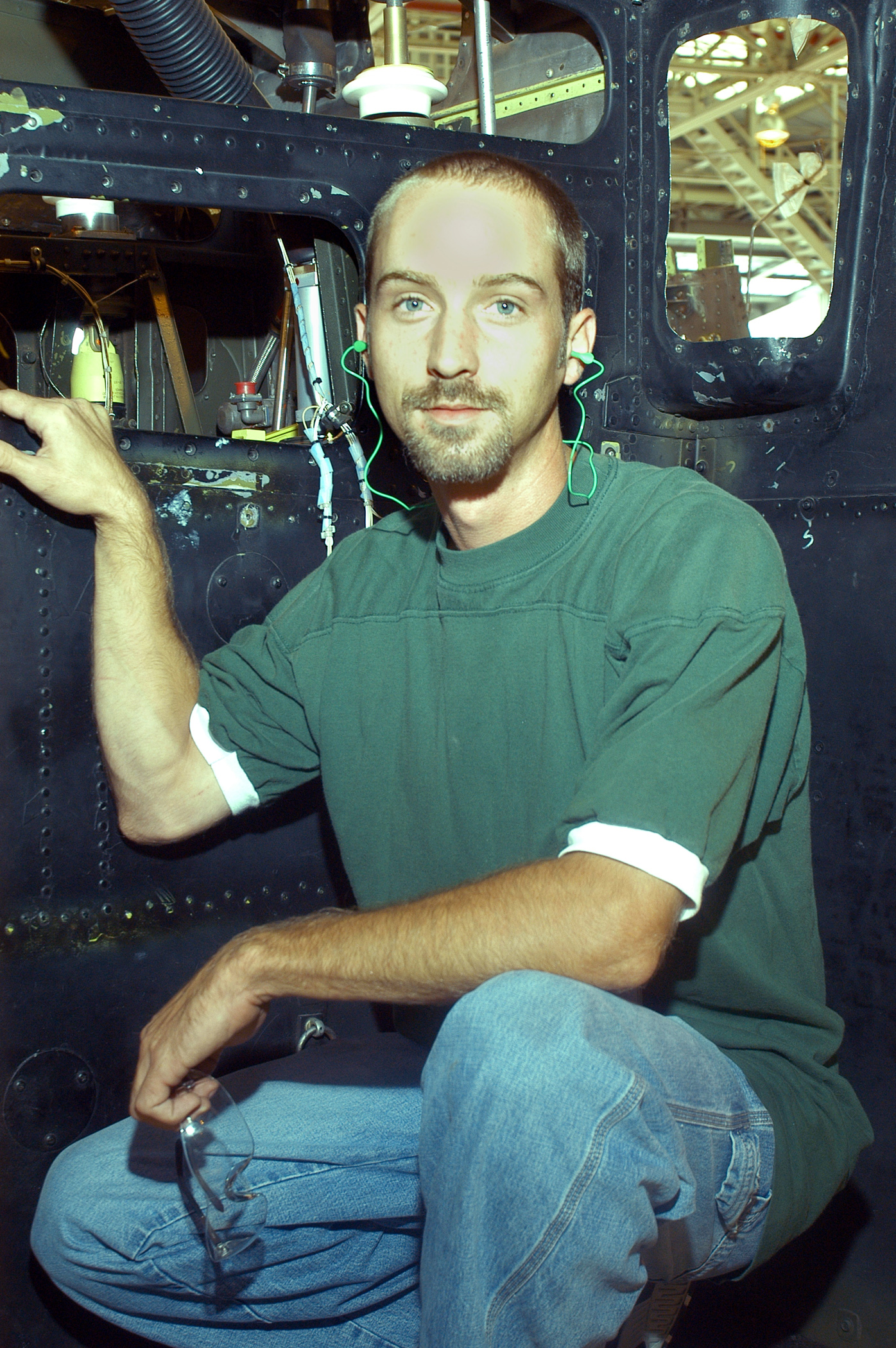
At first glance, Wilson is a pretty ordinary guy. A sheetmetal mechanic in the depot’s H-1 Sheetmetal Shop, he gets up in the morning like anybody else, puts his pants on one leg at a time, brushes his teeth, thinks about shaving. He makes the hour-plus commute from Greenville and joins the thousands of others who stream through the gates of Cherry Point every weekday morning, headed for their place on the depot floor.
It’s when Wilson drives through that first security checkpoint at the air station gate that he begins to become a little less ordinary. When he checks through the depot gate, the change is even more profound. He hasn’t really noticed, but he has donned a cloak of responsibility that isn’t worn by just anybody. Because along with the nuts, bolts, screws, parts and paint that people like Wilson install on these machines, they also are adding an extra coat of faith and trust. When Wilson and his thousands of other depot brothers and sisters give your aircraft back, they’re telling you that you can bet your life on their work.
Wilson first came to the depot three years ago to work for a contractor, followed a year later by joining the ranks as a regular employee. He was no stranger to this work or the responsibility that comes with it. He had already served a six-year stint in the Air Force drilling, cutting and bending the same materials that he works with here to fix KC-135 aerial refuelers, F-15 Eagles, F-16 Fighting Falcons, A-10 Thunderbolts and the new E-8C Joint STARS. As part of the depot workforce, his able hands have worked the metals of the C-130 Hercules, and H-46 and H-53 helicopters. Today, he is part of the large crew that is working tirelessly to put 69-6612 back together.
Sheetmetal work wasn’t exactly Wilson’s life dream. He was originally slated to work in electronics in the Air Force, but, well, you know how that works sometimes. Over time, it became what he was good at. Today, he shrugs and says, “Sheetmetal is sheetmetal.” Yet, despite his modest assessment of his skills, Wilson really brings more to the depot than meets the eye.
“I’m very pleased with the job he’s done here,” said Frederick Mercier, the sheet metal aircraft supervisor. Pleased enough that Mercier assigned Wilson to be the lead sheet metal mechanic for the broken Huey project. “He has shown that he has the ability to manage the job,” said Mercier. “He just seemed to be the man for the job.”
Wilson admits that he enjoys the added responsibility. Enough so that he would like to someday work to the level of examiner and evaluator, or to that of planner and estimator. Does he have what it takes? Only time will tell. In the meantime, he’s working in the right direction – doing the best job he can and working with the team.
As for aircraft 69-6612 – well, it looks like a helicopter again. And when this project is done, Wilson will start on the next one that takes its place.
Just another challenge for a not-so-ordinary guy.
-30-
Cutline: Jerry Wilson, a sheetmetal mechanic in the depot’s H-1 Sheetmetal Shop, brings more than just metalworking experience to the NADEP. (Photo by Mike Barton)