
Liaison team works to keep depot's good rep
By Mike Barton
Public Affairs Specialist
Somewhere out on the tip of the sword, dust rises from the flight line as helicopter No. 06 returns from a mission with holes where there should be none. The weary crew climbs out and treads across the hot metal deck plates, passing fortified bunkers and machine gun positions. They duck through the doorway of maintenance control and debrief with the maintenance control chief. The chopper crew’s mission is complete, but the mission of the maintenance crew has just begun.
Within minutes, mechanics swarm over the aircraft to assess the damage and the bird’s chances of getting back into the fight later that day. As the odds would have it, today the aircraft has returned with damage to parts that will be impossible to repair, and very difficult to replace. Are there replacement parts in the supply system? No. Spares in the area? No. How about scrap parts from that wrecked bird? Sorry, used ‘em last week. With nowhere else to turn, the maintenance control chief turns to the small white card pinned to his bulletin board, reads the phone number, and picks up the phone. It’ll be pretty early back in the states, but he dials anyway. His assistant has already marked a downward pointing arrow beside the aircraft’s number on the schedule board. There is no time to waste.
Thousands of miles away, in a small wooden building in the shadow of the Cherry Point Naval Air Depot’s headquarters flag, the phone rings. A Customer Liaison Team member answers, “Cherry Point Customer Liaison Office. Can I help you?”
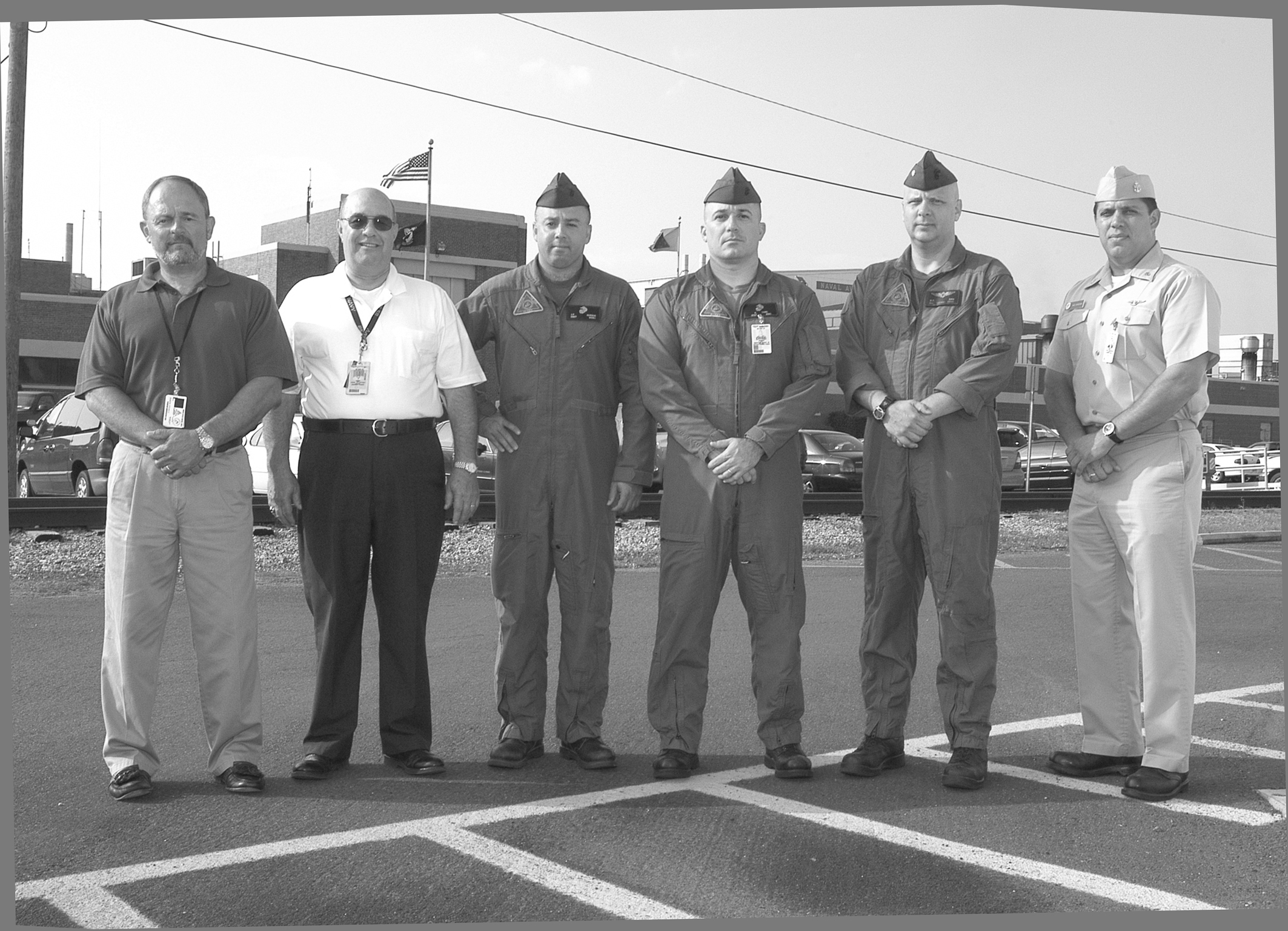
As farfetched as this might sound, the depot’s Customer Liaison Team get this kind of call every day. The team is made up of seven members – two former and five active duty military members with Maj. Warren Bair as the customer liaison officer. Many people here see the team as nothing more than “parts chasers,” a group of guys who beg, borrow and steal to get parts to their customers out in the fleet. What most don’t realize is that the team’s real mission is to preserve the depot’s reputation.
Talk to any one of a large number of warfighters out in the hinterlands, and you could get a much better picture of what they are all about. A strong tie to the end users of depot items seems to be the driving force behind the team’s strong work ethic.
With the depot and supporting fleet support teams and in-service support teams all engaged in support of the fleet’s mission, their office provides a service that is an integral part of the end result. “We do our best to be the last call that anybody makes,” says Steve Demers, the program lead, who insists that every call or e-mail is answered immediately with a “we’ll take care of it” type of response.
And this is what makes them so valuable to the men and women who work on and fly combat aircraft. It’s all about speed and
complete customer service. When someone needs a part, they will find it if it exists, find its replacement if it no longer exists, or have it made if that’s what it takes to get the job done. “They call us because they get what is ‘impossible’ to get, and answers for what is ‘impossible’ to answer,” says Gunnery Sgt. Hecter Saenz, the team’s staff noncommissioned officer in charge. Saenz likes to think of the team as “information brokers.” Although the team does deal in tangible items, it just as often deals in the information needed to get those parts from whatever source may be available, regardless of who has it or where it is. “Call us, you will get an answer,” says Saenz. Even when they have to turn to someone else to complete the request, their job isn’t done until they have confirmation that the customer has the end result in hand.
The team’s ability to back those words up is because it is the central hub of a network that it has created throughout the active and reserve fleets. According to Demers, a retired aircraft maintenance officer who spent 30 years in the Marine Corps, team members use their own experience within the fleet to contribute to the team’s overall effectiveness.
The remaining members of the team include Chief Petty Officer John Sheehan, who provides a link with the Naval Air Reserve component of their customer base by tracking Reserve aircraft and funding. Then there’s Staff Sgt. James “works like a dog” Kurnik and Staff Sgt. Al Blair, customer liaison reps who chase parts, confirm or arrange funding and track customer requests through an extensive data base. The final team member is Paul Ottey, a Navy Inventory Control Point representative who uses his contacts and experience as a retired Navy chief petty officer to track repairable parts used by the Navy and the Marines. (Call this guy a crusty old salt and he takes it as a compliment.)
The team’s customers can be found anywhere on the globe – land or sea. And though their primary customers are Marines and sailors, they have also assisted the Army, Air Force and some foreign allies. “Our bottom line is simple,” says Demers. “If someone calls us, we assist. If it’s not a customer of ours, we still assist.” This level of support is notable, even if only for its rarity, and it has benefits. It also serves to expand the customer liaison network.
According to Demers, the team spends most of its time assisting fleet customers with issues that others don’t deal with. The team spends an abundance of time assisting with repair of deployed aircraft and working with the aircraft planners and support teams to ensure the right parts are being manufactured for the depot’s planning and estimating teams spread all over the world. Team members work with agencies concerning test cells (local and abroad), oil analysis requirements, and assists with technical directive compliance requirements.
Additionally, they track shipped parts and aircraft schedules for induction and completion, as well as the associated funding issues. Managers aboard ship and from other remote sites contact them via e-mail when looking for references for repair parts, missing items sent in for calibration or repair. At times, their customers have no idea who else to call for their problems. Team members listen to their issues, direct traffic and, when possible, find the right person somewhere on the planet to contact the customer for assistance.
Perhaps the key links in the team’s network are the people who control the supply and manufacture of parts right here at the depot. We’re not talking about petty help; this is serious stuff. When a customer service request from the fleet comes to the Customer Liaison Office, the team first deals with Jim Wooliever’s Customer Service Office if there is a question of routing or ownership.
Next, the Customer Liaison team works with Fleet Industrial Supply Center equipment specialists like Debbie Balance, (for H-46s); Chris Collins, (for H-53s); and Greg Ciesielski, (for H-1s).
These are the people who supply parts for the maintenance side of the depot, as well as handling additional material requests from the liaison team. That means they must walk a fine line between supporting the fleet via the liaison team’s requests and supporting the fleet’s needs right here at the depot. This is not a symbiotic relationship, admits Ballance, who deals with the liaison team on a daily basis. The depot team concept drives the fact that difficult decisions must be made to ensure the depot does the right thing based on the available facts. Like NADEP commanding officer Col. John Gumbel has said, the depot is at war and keeping the deployed units flying is NADEP Cherry Point’s first line of support.
Sometimes supply is unable to provide the needed parts. Sometimes all other known sources can’t help. That’s when the team turns to Joe Faught, a planner and estimator in the manufacturing part of the depot. Once Faught and the other planners know that every avenue to procure a part has been exhausted, they figure out the details of making the part here, including the cost. “We try to give (fleet customers) the best advice on how to get what they need – especially their immediate needs – and at the best price,” says Faught.
Meanwhile, the liaison team continues to track the progress of each request and follows up until the job is done. “It’s based on credibility,” says Demers. “In this business, if you don’t follow through as a person, team or a depot, if you fail these people, you lose credibility.” Just like the military proverb: Without credibility, you only get to watch.
Back out in the combat zone, dawn marks the start of a new day. As the mid crew wraps up preflight inspections out on the line, the maintenance control chief carries his coffee through the door and peers sleepily at the day’s flight schedule that is already being sketched on the board. On the block for aircraft No. 06, pasted to the right of the down-pointing arrow, is a yellow sticky note. He looks closer and reads: Cherry Point called. The parts are on the way via FedEx. Should be here later today.
The maintenance officer, who has just entered the room, reads the note over his day crew leader’s shoulder. He looks at his maintenance control chief as if the Marine had just pulled a rabbit from a hat, and asks, “How did you do that?”
The maintenance controller replies with a nod toward a small white card on the bulletin board, “You just need to know who to call.”
-30-
Cutline: The Customer Liaison Team (from left) Steve Demers, Paul Ottey, Staff Sgt. James Kurnick, Gunnery Sgt. Hecter Saenz, Maj. Warren Bair and Chief Petty Officer John Sheehan. (Staff Sgt. Al Blair not pictured) (Photo by Mike Barton)