Super Stallions go tactical
By John C. Milliman
PMA-261 Public Affairs Officer
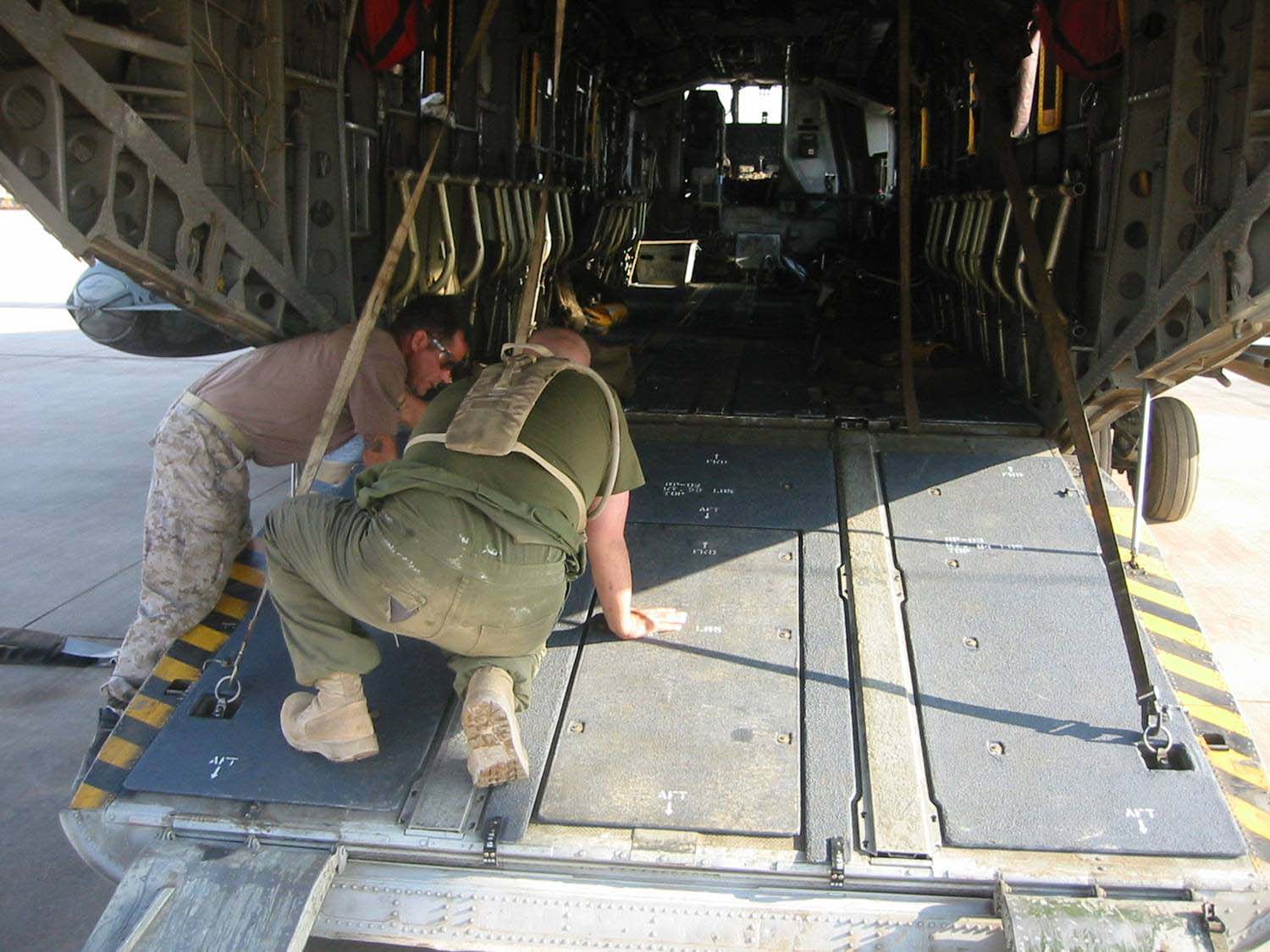
NAVAIR Patuxent River, MD -- Marines assigned to Marine Heavy Helicopter Squadron-461 at MCAS New River, NC added another “first” to “Iron Horse” history when they performed the first Fleet installation of the CH-53E’s new Ballistic Protection System during vendor-supplied training Sept. 13-14 on two aircraft supporting Horn of Africa operations.
Designed to protect the aircraft from small arms fire and blast fragments, the system’s introduction illustrates the evolving mission of the Corps’ heavy lift helicopter, according to NAVAIR’s Mark Bailer, the H-53 In-Service Aircraft deputy program manager.
“Starting with the mission to rescue Scott O’Grady, we’ve recently seen the CH-53E change dramatically from an aircraft ‘in the rear with the gear,’ to one that’s up front, tactical and, because of it’s speed and range, unescorted in unfriendly territory,” Bailer explained.
The Iron Horse Leathernecks also recently deployed to the Horn of Africa sporting the new Ramp-Mounted Weapons System, featuring the GAU-21 .50-cal machine gun, that protects the aircraft’s rear hemisphere.
“These two additions show how the ‘53’s role has evolved throughout the 1990s to the point where it is an assault support platform, with requirements for safety systems to protect it in its new battlefield environment,” said Gunnery Sgt. Dan Hammer, NAVAIR’s Ramp Mounted Weapon System program manager.
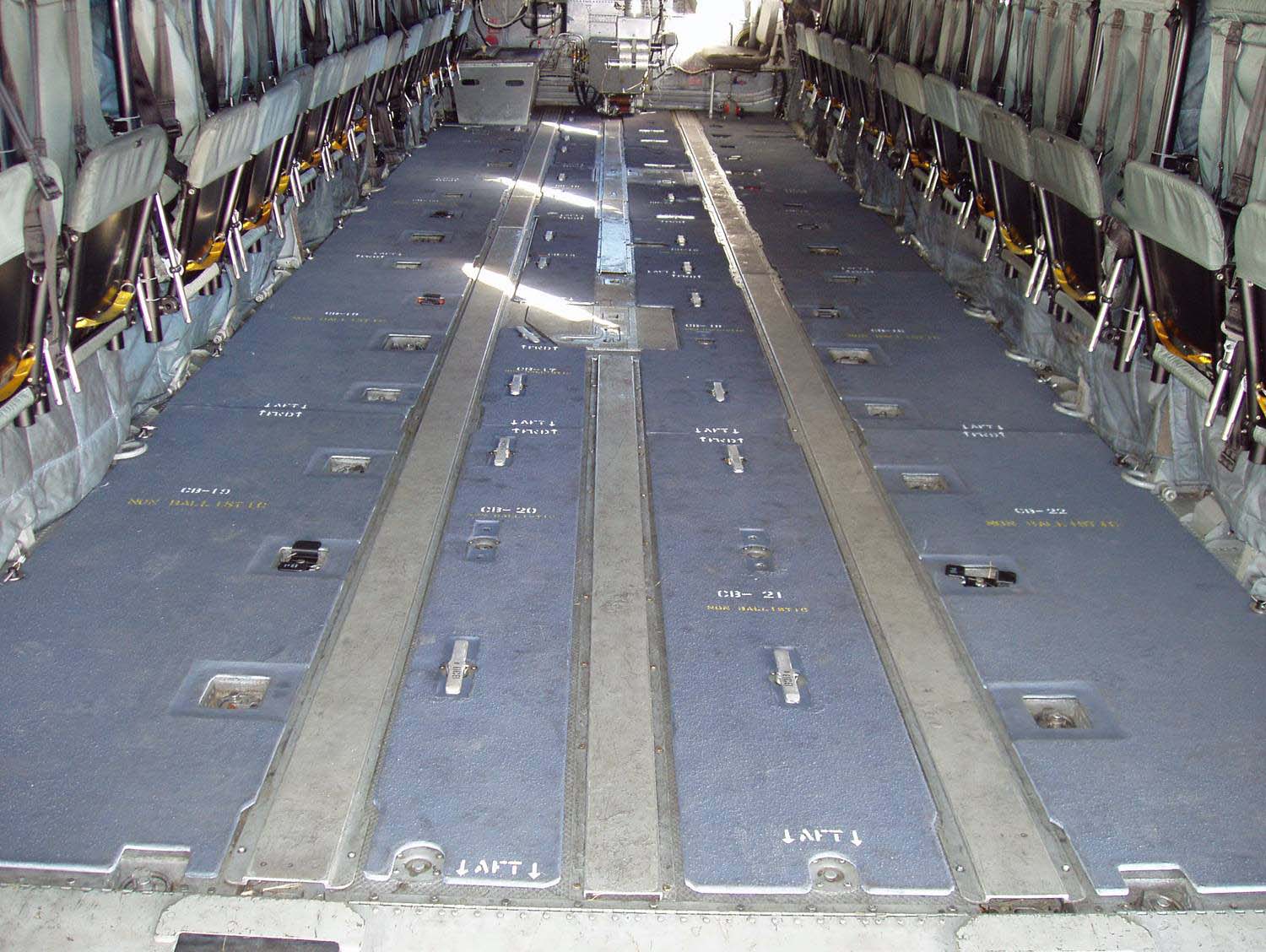
Consisting of 37 armor plates installed in the aircraft’s cockpit and cabin, the system uses a unique matrix of steel and Kevlar to protect against 7.62mm rounds and blast fragments and adds approximately 1,500 pounds to the aircraft.
Given the heavy lift capability of the aircraft, the protection offered by the BPS is well worth the added weight, according to Col. Paul Croisetiere, NAVAIR’s CH-53E program manager.
The system, which costs approximately $96,000 per aircraft, comes in two parts, Bailer explained. Fittings installed permanently in each aircraft to hold the armor plates in place are referred to as the “A-Kit.” The armor plates themselves comprise the “P-Kits.”
To eliminate making costly, time consuming modifications to the ‘53E’s airframe, the BPS was designed from the start to mount to the existing airframe, enabling the system to be installed at the squadron maintenance level with a limited amount of training.
Marine Corps Headquarters provided $7.3 Million to buy 149 A-Kits (enough for every CH-53E in the inventory, plus a few spares) and 61 P-Kits from Protective Materials Company of Miami Lake, Fla,, according to Bailer. To date, 22 of 24 aircraft in Operation Iraqi Freedom have been modified, while modification of all six aircraft in Operation Enduring Freedom is complete. All attachment kits are scheduled to be delivered by December 2004, followed by the last mission kit deliveries in February 2005.
Pravin Borkar, PMC’s program manager for the CH-53E BPS, recently returned from trips to both Iraq and Afghanistan where he was part of the support team training crews to install the BPS.
“Once a crew is familiar with the system, they can install the permanently mounted brackets that hold the armor in place in 6-9 hours and the armor mission kit in an hour,” Borkar said. “In addition, the system is easily maintainable at the squadron level.”
Protective Materials Company will be providing a range of services, from product concept and design, prototyping, and training to field support in Iraq, said Bailer.
-30-
Cutlines
(ramp armor install.jpg, floor armor.jpg) Marines assigned to Marine Heavy Helicopter Squadron-461, “Iron Horse,” at MCAS New River, NC install a Ballistic Protection System in a CH-53E recently. Designed to protect the aircraft from small arms fire and blast fragments, the system’s introduction illustrates the evolving mission of the Corps’ heavy lift helicopter. USMC Photo.