What did you say? A breakthrough in hearing protection technology promises relief for naval aviation maintainers
Amy Behrman
NAVAIR Technology and Intelligence Office
Have you ever left a heart pounding rock concert wondering when – or if – you’ll ever get the cotton out of your ears?
Well, the noise that reverberated through your eardrums doesn’t match the roar experienced by Naval Aviation deck crew and flight line personnel – day after day…hour after hour…as jet aircraft deliver their proverbial “sound of freedom” during multiple take-offs and landings.
According to experts, the sound threshold for pain is 125 decibels, “A” weighted or dB(A). To put this into perspective, a doorbell is 80 dB(A), a baby crying 100 is db(A), and a rock concert is 120 dB(A). One of the loudest sounds in the world – that of a tactical jet engine – can reach an “ear aching” 150 dB(A) for carrier aircrew standing along the foul line (within 43 feet of the aircraft) during a catapult launch.
According to the National Institute for Occupational Safety and Health (1998), continued exposure to noise above 85 dB(A) will likely cause permanent hearing loss. The maximum exposure time at 85 dB(A) is 8 hours, which should be followed by 16 hours of quiet recovery time. At 110 dB(A), the maximum exposure time is approximately one minute and 29 seconds.
Given these grim statistics, you would expect our sailors and aviators to be outfitted with the most powerful hearing protection systems available on the planet. Surprisingly, they’re not.
“There have been many significant advances in Naval Aviation since the 1950’s, but hearing protection hasn’t been one of them,” said James Wilt, technical point of contact (TPOC) for several of NAVAIR’s hearing protection Small Business Innovative Research (SBIR) projects in the Human Systems Department (AIR-4.6).
According to the March/April 2004 edition of “Approach” Magazine, today’s 1950’s vintage, double protection earplugs and earmuffs provide only 30 dB of total attenuation or noise reduction – that is, only if the double protection is properly worn for the entire duration on duty.
If you do the math, that leaves the average maintainer, landing signals officer (LSO), or landing signals enlisted (LSE) with a near continuous exposure of up to 120 dB(A). Offering little or no quiet sanctuary for a sailor to recover, life on a carrier can mean progressive and permanent hearing loss.
So why aren’t naval aviation personnel protected by commercially available Active Noise Reduction (ANR) headsets, if not superior technologies?
According to Wilt, there is no official Fleet requirement for ANR headsets or similar products to improve hearing protection. Why? Perhaps it is because flight deck noise is so extremely high that commercially available ANR headsets lack the power to cancel an appreciable amount of noise and can actually introduce a hissing noise. Cost is another issue.
But on a more basic level, many of our warfighters are unaware of the potential consequences of prolonged exposure, or ignore safety warnings, accepting hearing loss as an occupational hazard. Surprisingly, a large number of aircrew maintainer personnel choose not to wear double hearing protection at all, dramatically increasing the possibility of exposure related hearing loss.
In a recent ear protection survey of 301 deck crew personnel on 6 ships, a staggering 47 percent reported never wearing earplugs, according to study lead Valerie Bjorn of NAVAIR’s Human Systems department. Only 14 percent reported always wearing double hearing protection, and a mere 7 percent inserted their earplugs fully (which would provide 22 dB attenuation). Inserting a plug half way takes protection down to a mere 16 dB.
Hearing loss is the number one Veterans Administration disability claim, amounting to over $5.5 billion since 1977 for all Services. The US Navy and Marine Corps represent about 28 percent of total claims. Aside from hearing loss, prolonged exposure to jet noise could cause a pilot to miss a radio call, resulting in an aviation mishap, or worse – loss of aircraft and crew. In terms of aviation safety, the ability to hear is no less important than 20/20 vision.
Clearly, new technology isn’t the only answer. Better policies, documentation, training, and enforcement of hearing protection safety guidelines are needed.
In Search of a Solution.
Thanks to a team of government and industry personnel, new technology is being developed to prevent hearing loss and mitigate the associated risk. Personnel from NAVAIR’s Human Systems department have collaborated with representatives from the Air Force Research Laboratory (AFRL) under an ONR sponsored “Defense Technology Objective” to develop a total systems approach to hearing protection for F-35 Joint Strike Fighter (JSF) Navy, Marine Corps, and Air Force maintenance personnel.
The latest advancements toward mitigating this risk are being developed by Adaptive Technologies, Inc. (ATI), a small business operating in the Virginia Tech Corporate Research Center, Blacksburg, Virginia.
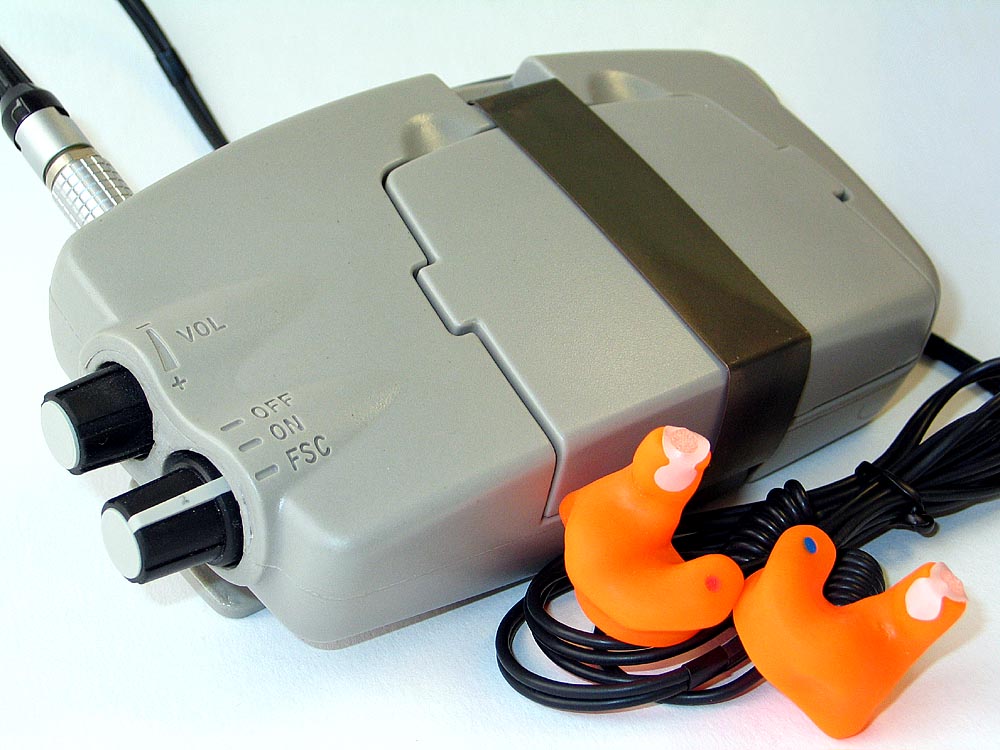
ATI’s unique communication-capable earplug combines advanced versions of active and passive noise reduction technologies to achieve the highest levels of attenuation ever tested in jet noise fields.
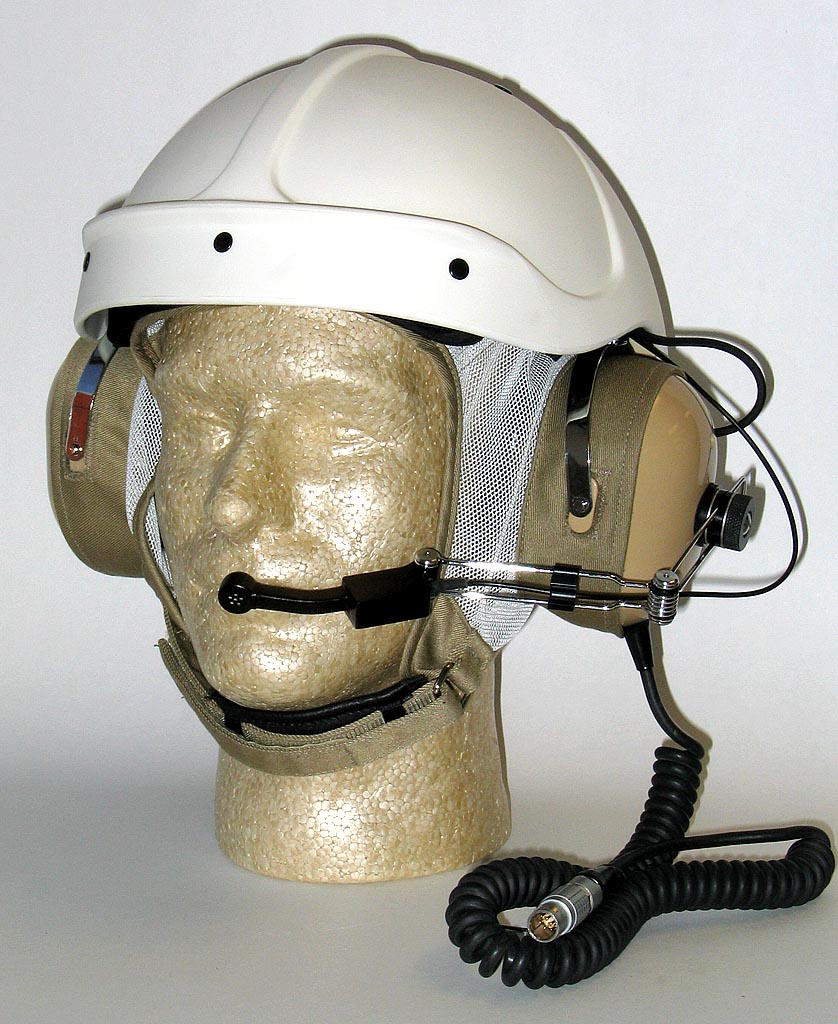
ATI is also developing a unique noise canceling communication microphone to attenuate noise entering through the boom-mounted microphone, which passes into the communications system. Lockheed Martin, the future F-35 supplier, has recognized ATI’s advancements, selecting ATI to supply the next generation of hearing protection and communications capabilities for the F-35 maintainers.
According to Wilt, the TPOC for ATI’s SBIR effort, integration of the new earplug with state-of-the-art passive protection technologies leads to a total hearing protection package that can provide attenuation nearing 46 dB in the loudest jet noise fields.
“This is significant when you consider that a single launch in a 24-hour period can exceed the safe noise dose,” said Wilt.
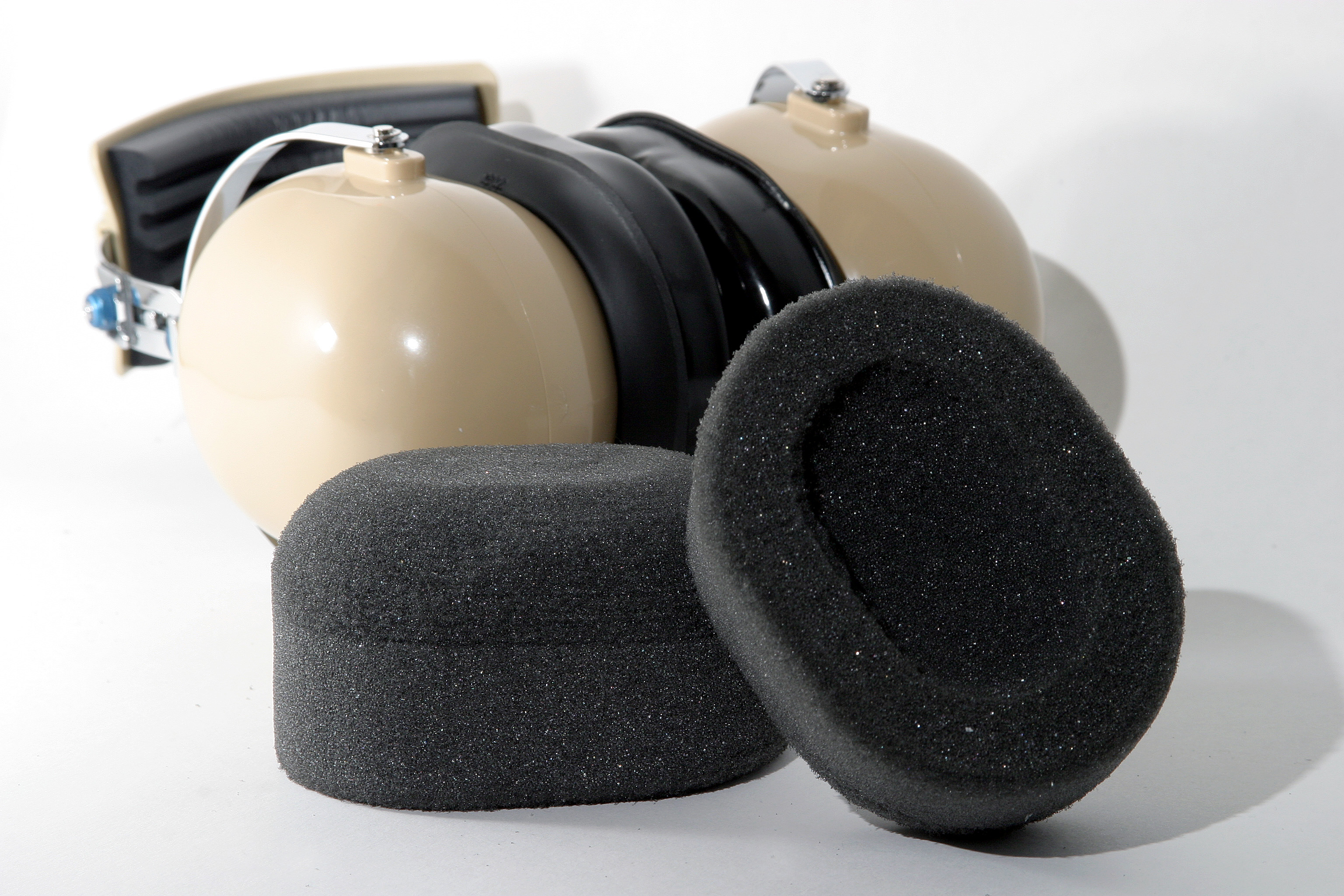
“This active noise reduction earplug, coupled with the ATI microphone, new ear cushions from David Clark Company, and a new ATI foam insert, offers a breakthrough advancement in hearing protection technology … the likes of which haven’t been seen for deck crew and flight line personnel in close to 50 years,” said Jim D’Andrade, senior systems engineer and Air Vehicle Systems Engineering Integration (AV-SEIT) Environment Team Lead for the Navy and Air Force JSF program office.
“The Navy, Air Force, and now the Army are sharing their technological developments and real-world expertise in the field, on ships, flight lines, and in the air, to aggressively tackle hearing protection problems through a variety of complementary systems,” continued D’Andrade. “Our evolutionary approach is to field improvements as they become available. The JSF program, ONR [Office of Naval Research], and USAF have provided the funding to help develop this new technology, which all Services can benefit from. Our bi-monthly, tri-service hearing protection meetings help us all contribute to this program.”
The Navy has been working with ATI for the past several years under an SBIR contract, managed by NAVAIR. See related article on NAVAIR’s SBIR program. The SBIR program is the primary vehicle through which the Federal Government funds small technology companies to perform research and development (R&D) projects, with the ultimate goal of fostering R&D project insertion into military systems and programs.
According to ATI’s website, the “QuietCommTM” Digital Active Noise Reduction (ANR) earplug “provides breakthrough hearing protection for military personnel in extremely high noise environments, where in some carrier deck locations, three seconds of unprotected exposure can cause permanent hearing damage. Developed for military jet support personnel, the custom earplug offers protection in high intensity ambient noise, and clear communication with improved speech intelligibility.”
How does this custom, digital earplug system work? According to D’Andrade, the unique earplugs contain a miniature microphone and speaker used to conduct the active cancellation portion of the attenuation, as well as provide communications capability. Sound inside the ear canal is actively “canceled” through a process known as active noise reduction (ANR).
While the concept of ANR is pervasive in headsets, this is the first practical application of the technology for deep-insert earplug devices. The real benefit is realized through extending the bandwidth of active control performance from the traditional 800 Hz to as high as 3000 Hz.
Because speech contains frequency content up to and beyond 3000 Hz, extending the control bandwidth to this range enables the technology to realize improvements in speech intelligibility that are not possible with current technologies.
ATI has also worked closely with David Clark Company Incorporated to demonstrate passive noise reduction improvements using a new ear seal and interior foam in a retrofit package. David Clark Company has been a key collaborator in ATI’s SBIR program. When coupled with the new passive ear seal and interior foam, the ANR earplug technology will provide more effective hearing protection than ever before.
Combining these advancements with the new QuietCommTM communication microphone technology, ATI’s suite of products may soon allow effective communication and hearing protection for up to 60 launch and recovery sequences before exceeding the total safe daily exposure limit.
Raising Awareness in the Fleet. So, your next question might be, “when will this revolutionary technology be available to the Fleet?” Without a formal requirement, and consequently no funding from the Navy or Air Force to buy better hearing protection, the answer is unclear.
Under the Lockheed Martin F-35 JSF contract, ATI would produce about 40 test units, enough to qualify and demonstrate the system’s utility as an F-35 platform solution for hearing protection. Officials are hopeful that a successful fleet demonstration will strengthen the case for broader application and funding.
“We’re addressing the funding issue on several levels – from encouraging our wings, squadrons, and ship divisions to report problems and concerns via HAZREPs (hazard reports) … to working with the Deputy Assistant Secretary of the Navy for Safety, PMA-202 (NAVAIR Aircrew Systems Program Office), and the JSF Program Office to identify a Navy sponsor and transition funding for production of advanced hearing protection systems,” said Jim Janousek, JSF Maintainer Hearing Protection Lead and the Cranial Redesign team Lead, NAVAIR Human Systems Department.
The challenge is that except for JSF, platform program offices typically don’t invest in life support equipment for deck personnel,” said Janousek. “It’s really an institutional issue that demands senior-level attention, funding and support across the Services and DoD.”
The Navy/Air Force hearing protection team is pushing for maximum speech intelligibility and hearing protection throughout the Services, including as many common components for helicopter, jet, and flight deck personnel as possible, in order to drive down the total logistics tail for all Services.
In the meantime, NAVAIR Human Systems representatives continue to take their message to the Fleet via Fail Safe Teams (FSTs), Air Medical Safety Officers (AMSOs), Squadrons, Operational Advisory Groups (OAGs), Integrated Management Panels (IMPs), and similar aviation life support forums – while the Fleet assists the team in documenting earplug usage aboard carriers and LHA-class amphibious ships.
The goal is to increase awareness and strengthen the case for improved policy, training, and enforcement, as well as to secure funding for advanced hearing protection technologies for the Fleet.
For more on hearing protection for aircrew personnel, read the March/April issue of Approach at http://www.safetycenter.navy.mil/media/approach/issues/marapr04/. Click on ”Can you hear me now?” an article by NAVAIR employees Valerie Bjorn and Jim Wilt, and “What did Paddles say?” by LCdr. Thomas A. Jones, an S-3 pilot seeking solutions for his hearing problem.
For information contact Amy Behrman at 301-757-2394 or [email protected].
Captions:
anrsystem1.jpg: QuietComm Digital Active Noise Reduction (ANR) Earplugs
Cranial_new.jpg: QuietComm Digital Noise Canceling Communication Microphone
Foam2.jpg: Cranial Headset custom Contoured Acoustic Foam Insert