Data tech keeps big machine running
By Mike Barton
It’s just another late winter day and Helen Cuff arrives at work. She walks from the parking lot, through the small wire gate, past rows of helicopter parts and through the door into her office where she enters a small cubicle much like the ones that her coworkers sit in.
On her small desk, expressionless, her sleeping computer quietly waits for that warm spark that will wake it, like what a hot cup of coffee does for its human counterpart. Inside the machine, buried among millions of bytes of code, lies a program that Cuff will use to aid in her contribution to the NADEP team. Stacked in file boxes and neatly lined up in file cabinets behind her chair are forms and folders that add to the daily equation. Hidden away in one of those files is the standard “PD” – a position description form for Cuff’s job here, simply titled “Data Technician.”
Cuff doesn’t spend much time thinking about that title. Neither she, nor the people whom she works for, could quantify her role here in such base terms. To those who know her, it might be easier to simply say she is a small gear in a big machine – but one who makes the machine hum along much more smoothly and efficiently than it would without her.
Cuff works in the Industrial Engineering Branch of the Industrial Production Support Department. Her primary responsibilities include the processing, tracking, reporting and the release of NAVAIR Systems Command technical directives. There is probably no easy way to explain what all that means to anyone who isn’t an engineer. But to those engineers, it means a lot, especially because she’s good at it.
To get even a glimmer of what she does, you must begin with the directives themselves. You know what it’s like when you buy a new toy for your kid and it comes with a set of instructions on how to assemble it. Well, when artisans start working on an aircraft here, they too have a set of detailed instructions telling them exactly what to do and how to do it. Except unlike you when you are putting that toy together, they can’t just toss those instructions aside and make it up as they go. Their instructions, or better yet, directives, are a written order. No shortcuts, no deviations. (No puzzling parts left over.) That way, when Capt. Devildog is winging over Iraq or some other hostile environment, he doesn’t have to worry about whether all of the widgets and gizmos are where they are supposed to be and are doing what they are supposed to do.
Now let’s say that an engineering tech figures out a better way to repair something on an aircraft. To incorporate that change into the directive system, it must be routed through numerous people to determine whom it will affect and how it will affect them. It may require testing and approval by the manufacturer. It might require new tools or new parts. Safety issues will have to be examined. It will probably change the way that the work is billed, which will lead to changes in the overall depot budget. The effects of this change can mushroom out like the cloud in a miniature nuclear explosion.
And in the middle of that cloud, Cuff controls and tracks the changes like a conductor of a huge orchestra. Her tools: a computer, a telephone, a keen sense of order, and a lot of patience and persistence. In the end, she will have interfaced with a dozen divisions and carried the change through to its completion as a new directive in the Technical Data Department’s technical library, the central storehouse for all of the depot’s technical directives. She’s been doing it for 15 years. Before that, the work had to be done by the engineering techs themselves.
“I remember way back when we had to hand-write everything,” says Cuff, referring to the days when computers were the exception rather than the rule. That experience was a building block on the overall expertise that she has accumulated over the years, uniquely qualifying her for this job. As times changed, so did Cuff. Now, through the computerized Technical Directive Tracking System, she manages the technology required to keep her part of the big machine moving.
Cuff hasn’t always worked alone in this position. Several years after she started, the depot created a second position to help split the growing workload. Cuff trained the new person to take over a portion of the job related to formal (external) technical directive changes. Last year that position was vacated.
So in February Cuff was joined by Linda Rivera, who she is training to pick up the baton for that other position. Rivera will handle directives that originate outside of the depot and come here via NAVAIR. This will allow Cuff to refocus on her primary objective of local directives.
Rivera’s cubicle looks much like Cuff’s – a small bit of space with a desk, a chair, a computer, a telephone and some file cabinets. In one of those cabinets, tucked neatly out of sight, is another standard PD form, like Cuff’s, titled “Data Technician.” Only time will tell whether Rivera will go beyond that simple title to become another invaluable gear in the big machine. But if Helen Cuff has anything to do with it, it will be a very good bet.
-30-
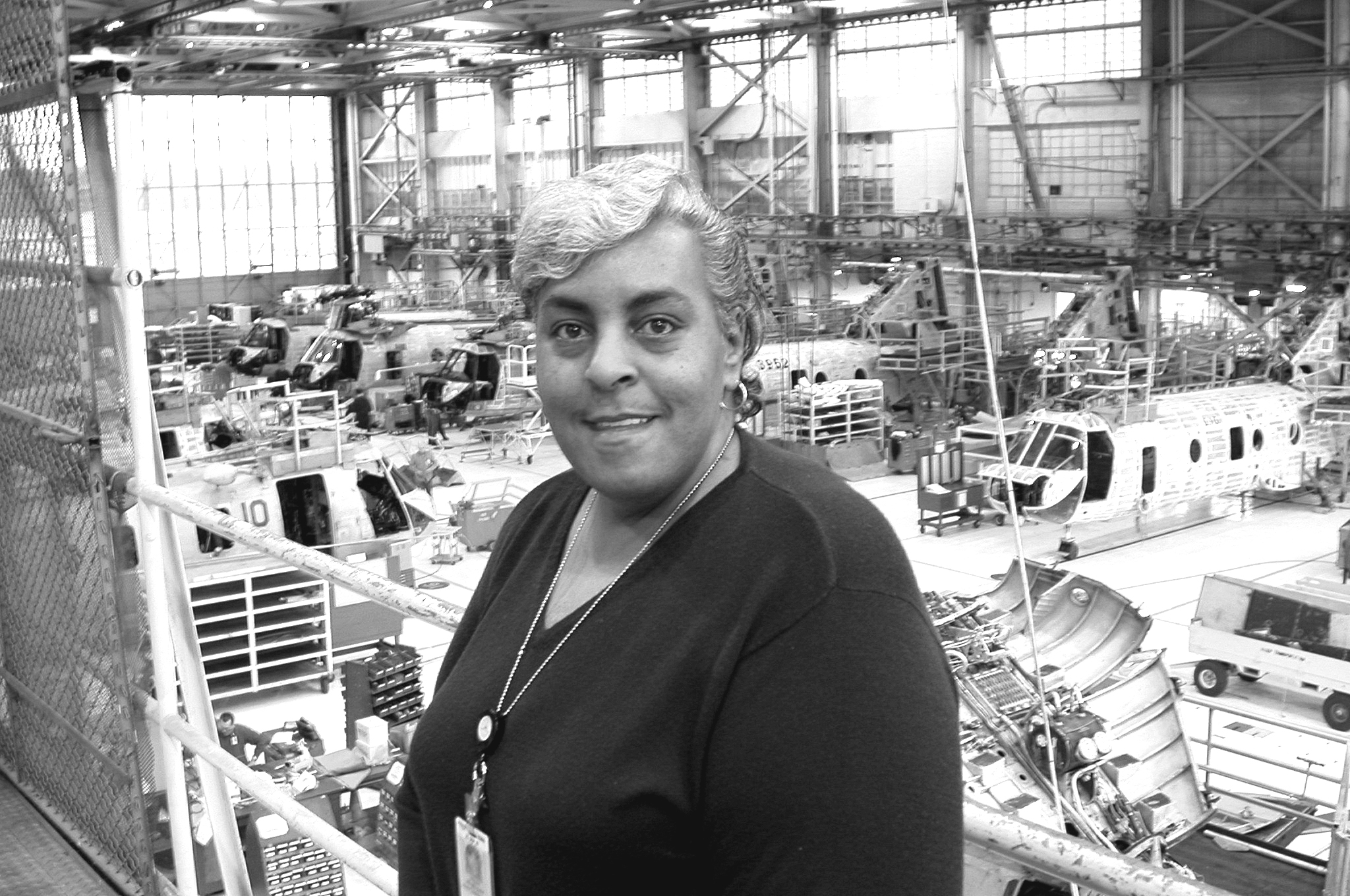
Cutline: Helen Cuff, a depot data technician, is a small, but important gear in the big NADEP machine. (Photo by Mike Barton)