Navy Publishes New Naval Aviation Vision
By Eric Badertscher, AIR-7.1 Command Strategic Leadership Support
The Navy is undergoing a massive transformation, in response to changes in technology, operational concepts, and world events. In light of this, Naval Aviation has developed a new vision to carry it through the challenges of the early 21st Century.
The Naval Aviation Vision represents the collaboration of Fleet warfighters, Pentagon planners, and NAVAIR technical experts. The document was released under the authority of the Office of the Director, Air Warfare Division (N78) in the Office of the Chief of Naval Operations, in conjunction with the Commander, Naval Air Forces (CNAF), and the Commander, Naval Air Systems Command (COMNAVAIRSYSCOM).
The Vision includes half-a-dozen technology roadmaps that show how Naval Aviation will support the Navy’s overall transformation. These changes will better enable the Navy to project its own power onto the littoral battlefield, as well as ensure other Joint Forces’ sustained success.
The roadmaps chart the proposed development of aircraft carriers, Navy-Marine Corps aircraft, weapons, networks, and sensors. Some forecasts, as in the case of Naval Aviation weapons, go out to the year 2010. Other charts, such as the aircraft roadmaps, extend to 2015-2025.
The publication-development team, overseen by N78 and NAVAIR, included military, civilian, and contractor personnel. NAVAIR participants included the Air Warfare Analysis Division (AIR-4.10) and the Office of Command Strategic Leadership Support (AIR-7.1).
The Large-Deck Carrier: Bedrock of Naval Aviation
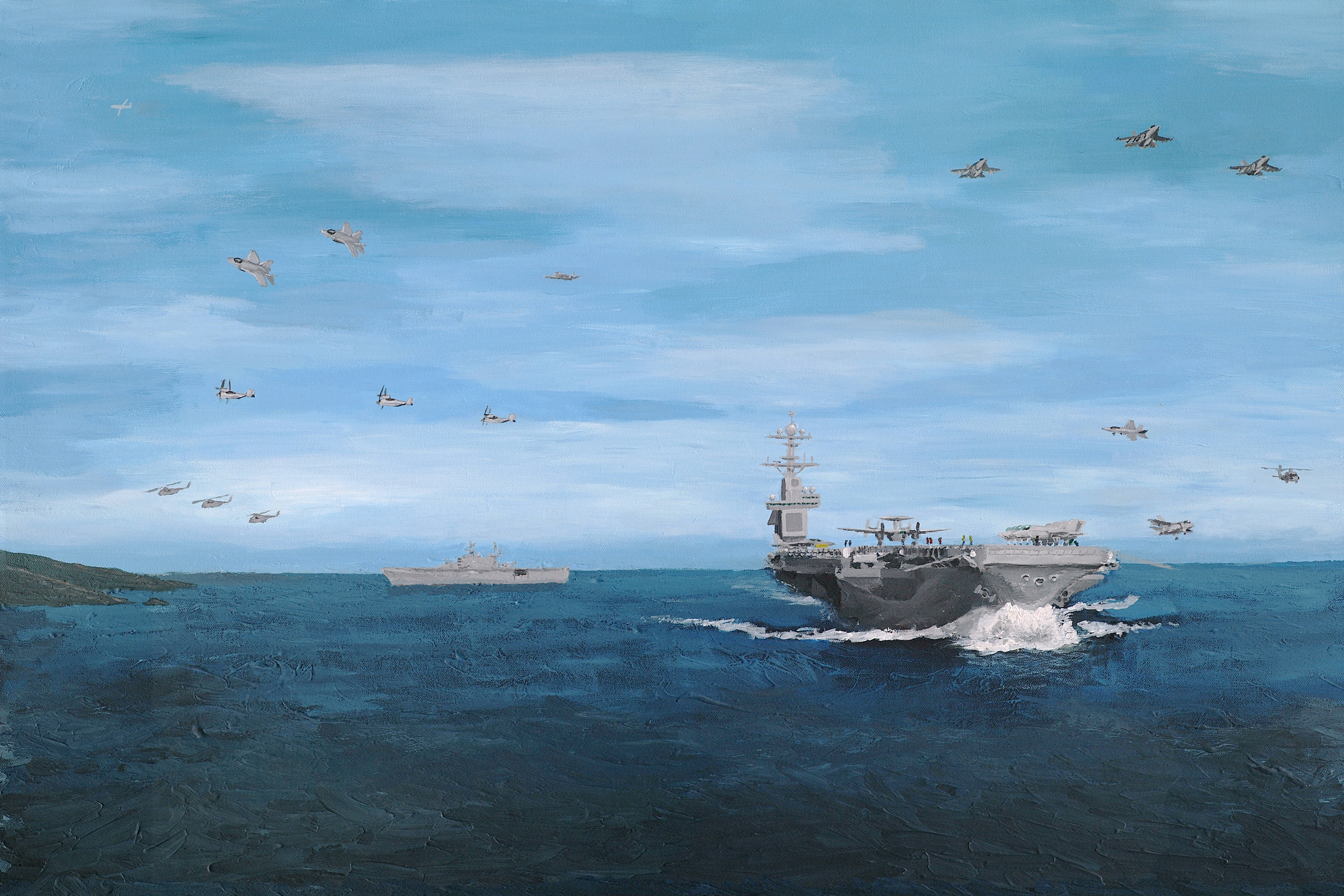
At the heart of the Naval Aviation Vision is the large-deck aircraft carrier, the centerpiece of U.S. forward-deployment strategy. Often described as “four and one-half acres of sovereign U.S. territory,” the aircraft carrier has frequently been first on the scene in operations ranging from World War II to 21st Century Iraq. The Vision forecasts that advanced CVN 21 carriers, armed with Super Hornets, Joint Strike Fighters, and Unmanned Combat Air Vehicles, will continue to maintain the United States’ primacy of the seas into the foreseeable future.
The Vision, Naval Transformation, and Sea Power 21
The Naval Aviation Vision is aligned to the Navy’s overall plan for transformation, as set forth in the separate document titled Naval Transformation Roadmap: Power and Access…From the Sea. The Vision also supports the important concept known as “Sea Power 21”–the Chief of Naval Operations’ construct for the 21st Century Navy. This construct includes three fundamental capabilities:
· Sea Strike: Projecting Precise and Persistent Offensive Power
· Sea Shield: Projecting Global Defensive Assurance
· Sea Basing: Projecting Joint Operational Independence
Sea Power 21 also involves three transformational initiatives:
· Sea Warrior (personnel management),
· Sea Trial (technology development and deployment)
· Sea Enterprise (acquisition and material support)
The Navy will turn Sea Power 21 from concept into operational reality through the information architecture known as FORCEnet.
FORCEnet: Maritime Network for the 21st Century Battlespace
A “system of systems,” FORCEnet will enable Sea Power 21 by creating a single, comprehensive network for the 21st Century naval “battlespace.” This is more than simply one computer network or data link. Instead, FORCEnet represents the seamless connection of all Naval and Joint assets in theater via their sensors, networks, decision aids, weapons, and supporting systems.
This vision requires the Navy to end its reliance on “stovepipe” networks and single-purpose systems and integrate fully into Joint and national systems. The Navy/Marine Corps Team will reduce its emphasis on “platform-centric” operations in favor of “Net Centric Operations” (NCO). This new approach, enabled by the FORCEnet concept, will link our forces via a global grid of interoperable and overlapping networks. Formalized through doctrine, NCO will enable U.S. forces to sustain access and decisively influence events both ashore and at sea—anytime, anywhere.
This transformation will also further similar initiatives within the Navy’s Sister Services: the Navy’s ability to project offensive and defensive power ashore will aid the Army and Air Force’s efforts to become lighter and more expeditionary, less reliant on air bases in potentially unwilling host nations.
To find out more, please contact:
· Rick Meana in the Office of the Director, Air Warfare Division (N78). Telephone: (703) 614-2646. Email: [email protected].
· Greg Makrakis in the Air Warfare Analysis Division (AIR-4.10), NAVAIR. Telephone: (301) 757-2453. Email: [email protected].
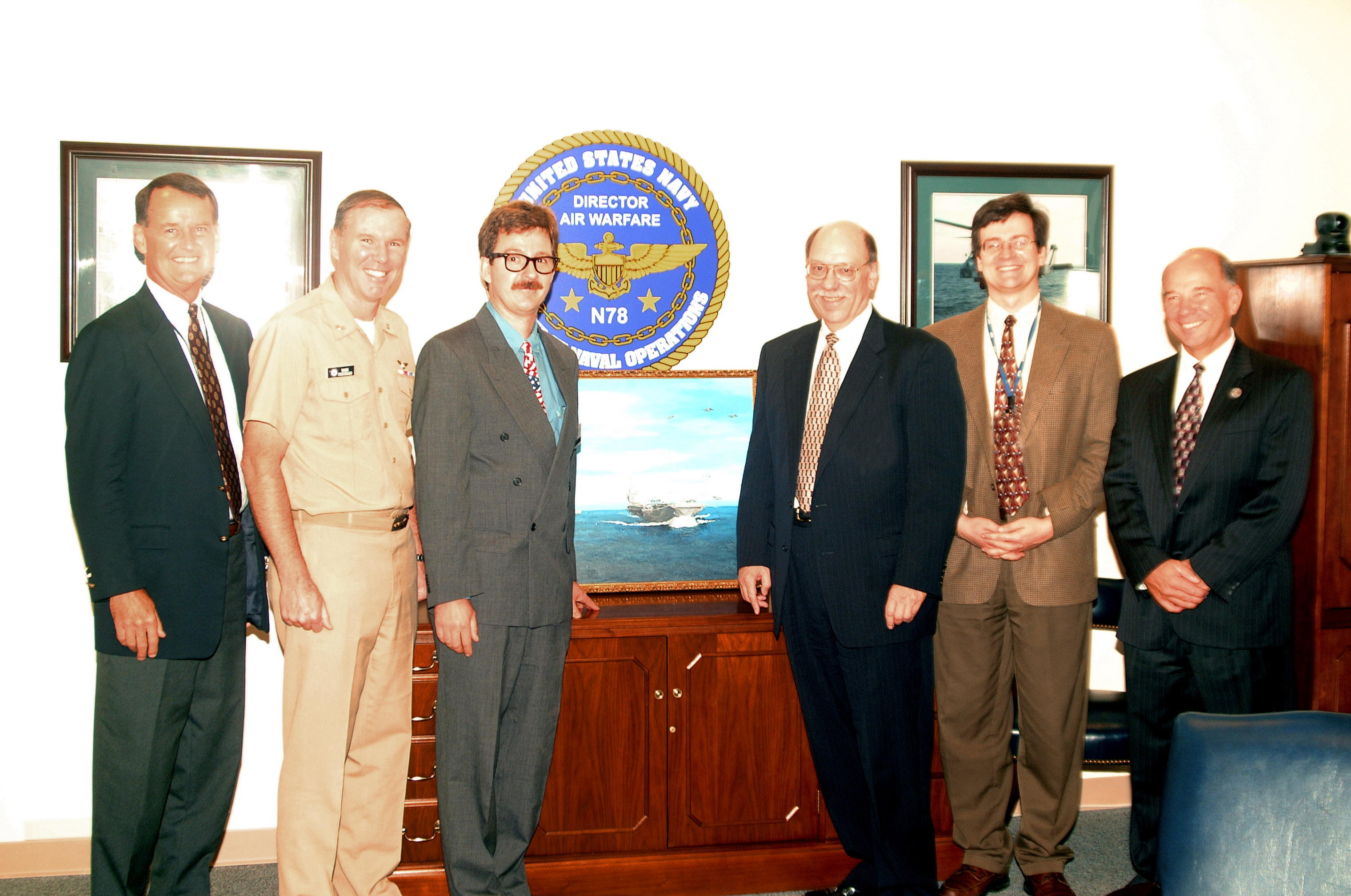
Photo Caption 1: Some members of the development team present the Naval Aviation Vision Cover Painting to RADM Mark Fitzgerald, Director of the Air Warfare Division (N78), on October 7, 2003 in the N78 conference room at the Pentagon. From left: Malcolm Taylor, RADM Mark Fitzgerald, Chris Jantsch, Bob Ghisolfi, Eric Badertscher, and Rick Meana. U.S. Navy photo.
Photo Caption 2: Front Cover of Naval Aviation Vision. Cover painting by Chris Jantsch. U.S. Navy photo.