NAWCWD builds relationships early with industry
By Renee Hatcher
NAWCWD Public Affairs
The first round of the site-on-site new-employee exchange between NAWCWD and Raytheon Missile Systems is in the books.
Ten members of the Engineer and Scientist Development Program (ESDP) traveled to Raytheon in Tucson, Ariz. in September to learn about weapons manufacture. A month later, Raytheon sent eight of its young engineers to China Lake to take a look at weapons from a research, development, and test and evaluation perspective.
“We see huge value in these kinds of exchanges because we are building connections at the early career levels of our professional work force,” said Scott O’Neil, NAWCWD executive director. “Through mutual understanding of the private sector and government environments, together we can build better products for our warfighters.”
This program, aimed at improving communication and building relationships early, is conducted by an executive steering committee of senior level NAWCWD and Raytheon representatives. This first exchange used a pilot group of young engineers from NAWCWD’s Weapons and Energetics Department (4.7). The plan is to expand the program to include ESDPs from other competencies in future exchanges.
“We’re doing this at the junior level to help build those important relationships that will be so important in the future,” said Steve Underwood, 4.7’s deputy director. “This is a great opportunity for the young engineers to see firsthand the respective environments of both the Navy and the contractor.”
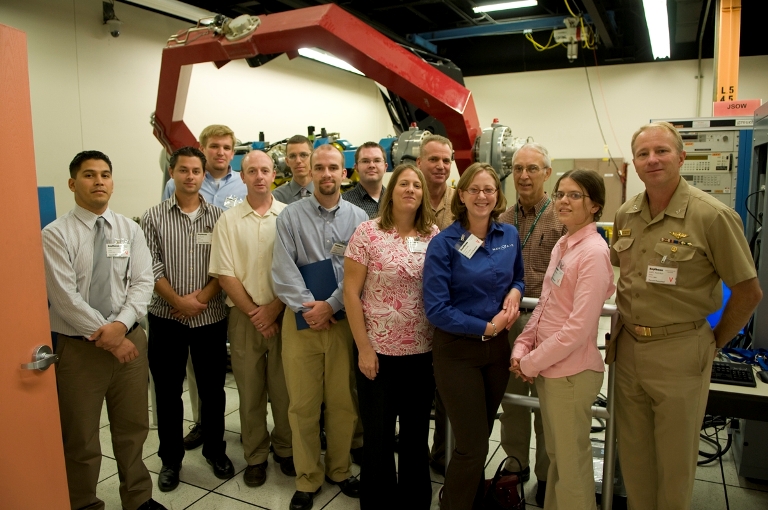
Capt. Rich Burr, 4.7’s military director, accompanied Peter Carrillo, Shirli Sishc, Rachael Moore, Chris Robinson, Erica Rude, Peter Cross, Jim Sanders, Ryan Hunter, Jon Surmi and Quin Lucas to Tucson.
“The industry exchange went extremely well and received an overwhelmingly positive response from our ESDPs that participated,” Burr said. “This opportunity greatly enhanced our relationship with our industry partner and it helped provide a platform for future collaborative efforts.”
Feedback from the 4.7 ESDPs indicated that one of the best parts of this visit was the opportunity to speak face-to-face with their industry peers.
“It’s somewhat comforting to know that Raytheon faces some of the same technology challenges that we do,” said Rachael Moore, an electronics engineer in 4.7. “It’s also nice to see firsthand that they share the same commitment to the warfighter as us.”
The young engineers also said they appreciated the level of commitment from Raytheon’s top leadership to support this effort in improving communication.
“The trip to Tucson really helped me to better understand Raytheon’s processes, organization structure, and capabilities,” said Erica Beeler, materials engineer in the 4.7 Composites Laboratory Branch. “This kind of interaction will facilitate future collaboration.”
The one-day agenda included an overview of their programs with Raytheon leadership, and tours of the contractor’s labs in Tucson. An informal social concluded the visit.
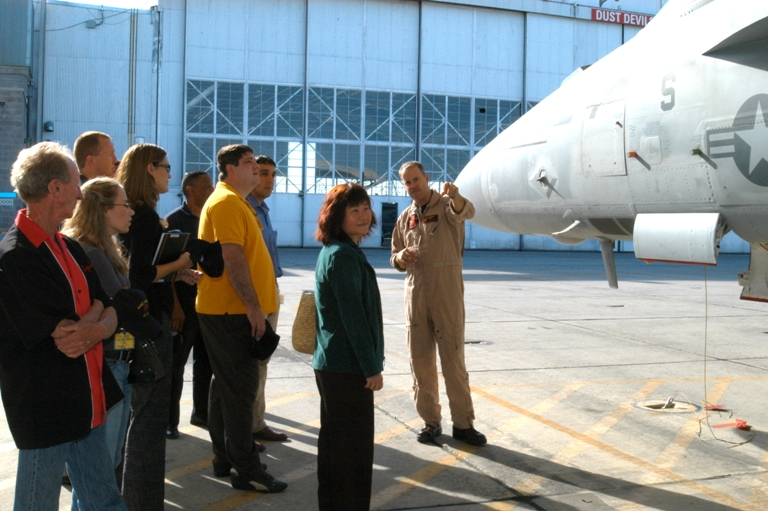
The visit to China Lake included tours of the Spike lab, Range Control Center, Air Test and Evaluation Squadron 31, and the Advanced Weapons Lab.
“I’m thrilled to be here,” said Bethany Martin, guidance and control engineer with Raytheon. “This is a great opportunity to understand exactly what the military is looking for, and it’s really interesting to see the research and development part of the work here.”
While at China Lake the Raytheon engineers also learned about the work being done with the Precision Strike Suite for Special Operation Forces, and threat signal processing, and took a windshield tour of the China Lake Propulsion Lab.
“This sort of event goes a long way in building relationships and tearing down any barriers that may exist,” said Ray Hoffman, manager of Raytheon’s China Lake field office. “The familiarization makes it easier for both sides to be more proactive; when issues arise, the right relationships will already be in place.”
PHOTO CUTLINES
Photo by Jon Black, Raytheon
Capt. Rich Burr, military director for NAWCWD’s Weapons and Energetics Department, accompanies 10 members of the Engineer and Scientist Development Program on a site visit to Raytheon Missile Systems in Tucson, Ariz. on Sept. 22 as part of a new-employee exchange with the contractor.
Photo by John Perrige
Capt. Eric Holmberg, commanding officer of Air Test and Evaluation Squadron 31 (VX-31), gives visiting Raytheon engineers an up-close look at some of the squadron’s aircraft. Tom Pearl, left, the squadron’s technical director, accompanied the group on a tour of the facility.