Naval Air Station Patuxent River P-8A Fleet Growing
NAVAL AIR SYSTEMS COMMAND, Patuxent River, Md. – A week-long battery of ground tests greeted the newest P-8A aircraft to reach Naval Air Station Patuxent River.
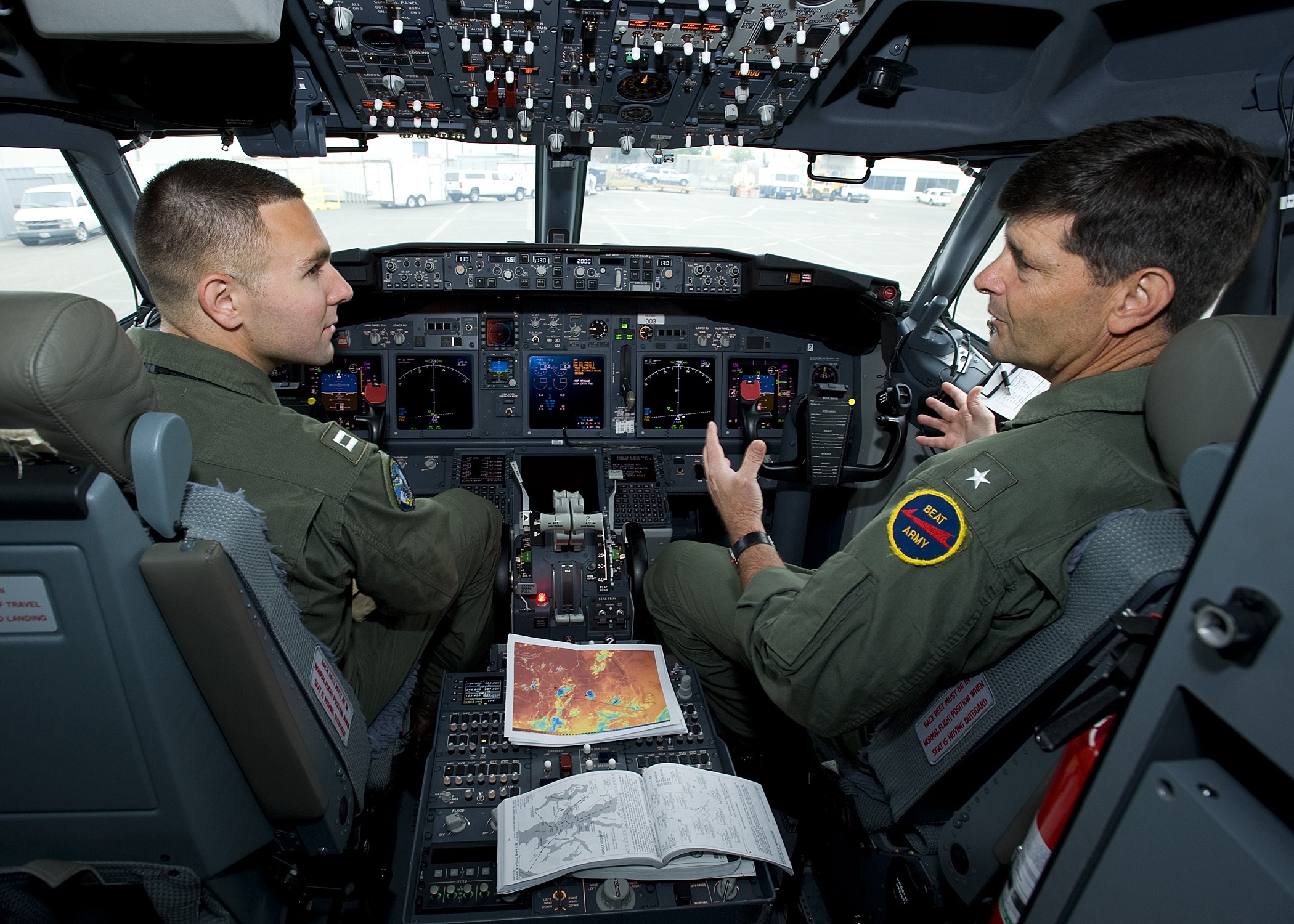
The second test aircraft arrived last weekend after a flight from Boeing’s Seattle facilities. Rear Adm. Bill Moran, Maritime Patrol and Reconnaissance Group commander, was among the crew to deliver the aircraft, referred to as T-2.
T-2 completed the first mission systems tests on the West Coast including an approximate four-hour test flight on June 11. The dedicated mission system flight was a joint operation between a P-3 and the P-8 aircraft.
Flight test points focused on acoustics, communications and radar system functions. According to team leaders, all primary objectives were met, and the systems were working as advertised.
“Feedback from our flight test crews was very positive from the first several mission system test events out in Seattle,” said Capt. Mike Moran, program manager for PMA-290. “It is unique to see the systems performing so well this early in the flight test phase of a program this size, but the investment in our high fidelity weapons system integration lab with flight qualified hardware and software is clearly showing its value. Although we are still early in the flight test program and the majority of flight test events remain ahead of us, this is a very positive first step for the program.”
On the last test flight in Seattle the P-8 flew along side a P-3 to evaluate the acoustic system performance and conduct a direct comparison of the data coming through the sensors and displays for both aircraft. During that flight test, the P-3 deployed 30 plus sonobuoys. The P-3 and P-8 tracked the acoustic target and processed the information on the mission consoles. The aircraft demonstrated acoustic subsystem capabilities of receiving, processing and displaying buoy data.
“The acoustic system operated extremely well throughout the entire two hour test flight, demonstrating very good correlation with the performance exhibited in the system integration lab,” said Neal Rothback, P-8A integrated product team deputy.
The program’s remaining flight test aircraft, T-3, will transfer to Pax River later this summer. Each aircraft will focus on extensive mission systems and weapons system testing, ensuring the P-8A’s ability to carry out the anti-submarine warfare, anti-surface warfare and intelligence, surveillance and reconnaissance operations.
The Poseidon will replace the P-3C Orion as the Navy’s premier maritime patrol and reconnaissance aircraft. Its advanced mission systems, software and communications technology will allow the Fleet to carry out the same missions as the Orion, but with greater situational awareness that will enhance mission success.
The P-8A program continues to meet all performance criteria and is on track for initial operational capability in 2013.
--30--
Photo Cutline
T-2 arrival at PAX River
U.S. Navy Lt. Wayne Lewis (left) discusses flight procedures with Rear Adm. Bill Moran, Patrol and Reconnaissance Group commander, prior to departure of the second P-8A test flight aircraft from Seattle, Wash., to Naval Air Station Patuxent River June 19. The aircraft, known as T-2, is one of three test aircraft that will focus on extensive mission systems and weapons system testing, ensuring the P-8A's ability to carry out the anti-submarine warfare, anti-surface warfare and intelligence, surveillance and reconnaissance operations.