FRCSE DET Mayport upgrades engine test cell
FRCSE DET Mayport upgrades test cell
“improves helicopter engine efficiency”
By FRCSE Public Affairs
Fleet Readiness Center Southeast (FRCSE) Detachment (DET) Mayport upgraded the Engine Test Cell propulsion support equipment in February to improve GE T700-401C helicopter engine efficiency and accuracy for the squadrons the detachment supports.
The equipment was upgraded from a reaction-based torque system to a phased-shift torque system that measures the twist of a shaft mounted between the engine and a dynamometer, an instrument used for measuring mechanical power.
Mechanical Engineer Brian Zarko from Naval Air Systems Command, Lakehurst, N.J., assisted with the upgrades. He said the engine produces the torque (turning force) and the torque meter measures the torque transmitted by a rotating shaft.
“Mayport FRCSE is the only activity currently using the new torque measurement system,” said Zarko. “The new torque meter uses two pick-ups to measure the twist of a toothed shaft for improved accuracy.”
Zarko said the system reduces the need for expensive periodic testing, which requires an engine with known performance to verify the correction factors are still accurate on the engine being tested. It requires an oil supply and return, which prompted the modification. The upgrades also replace dated equipment that can prove problematic when finding replacement parts.
Test cell operator Aviation Electrician’s Mate Terry Lamb said the new system makes calculating the torque values easier and faster for the technician at the beginning of the performance run.
“You no longer have to allow for a correction factor for the torque to each engine,” he said. “You still have to compute the torque value, but there is one less step.”
The technicians ensure the engine is outputting the correct horsepower using a dynamometer to simulate the load from a turning rotor head. They conduct a performance calibration on all required instruments and make sure all gauges are reading correctly.
After removing the load, the engine is cooled and restarted. The operator runs a preservative through the fuel system and the engine is ready for issue.
Aviation Machinist’s Mate 1st Class Jennifer Martindale, Power Plants 400 Division leading petty officer said the detachment also assists squadrons with troubleshooting engines.
“If an engine doesn’t have high flight hours or if a helicopter has sat during a Planned Maintenance Interval and the engine has to be run, we will do a “test and check” on the test cell,” she said.
If an engine is faulty, this working relationship allows FRCSE Det Mayport to swap out the squadron’s defective engine with a functional one. The squadron maintains custody of the engine, operational tempo is not interrupted and the Warfighter remains mission ready.
//USN//
Photo Caption:
10-34A:
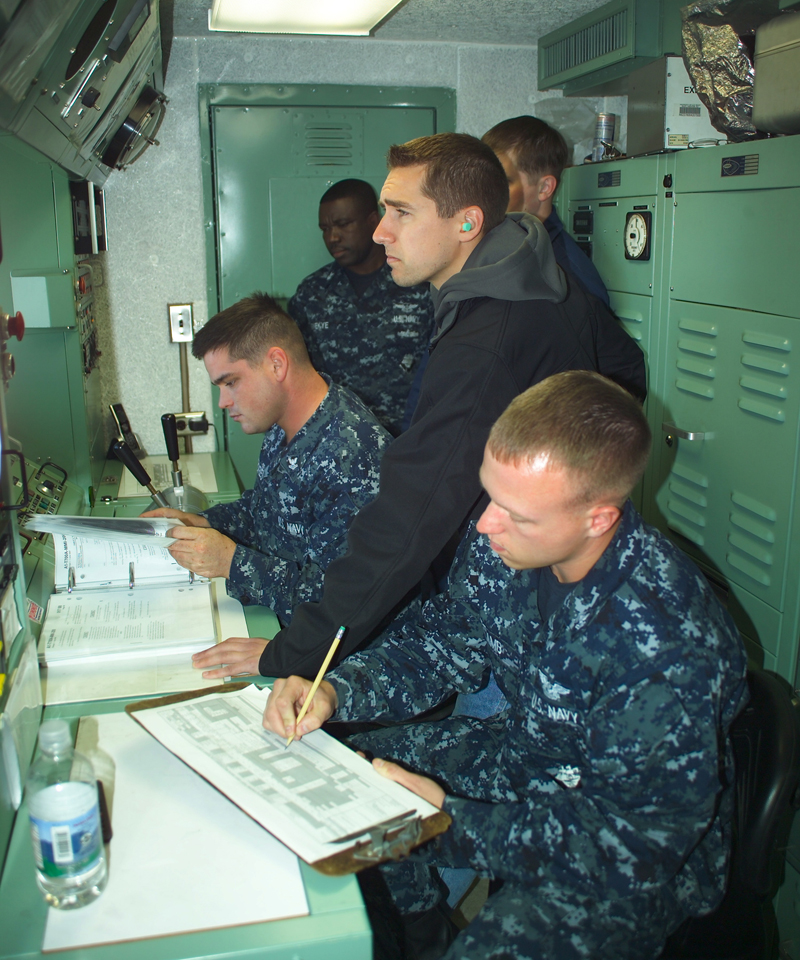
NAVAIR engineer Brian Zarko (center) provided engineering support for the FRCSE Det Mayport Engine Test Cell upgrades. Test cell operators AE2(AW) Terry Lamb (seated from right) and AD2 Daniel Flores prepare for an engine performance run as the leading petty officer AD1(AW/SW) Nana Gyekye (from rear left) and AD1(AW/SW) Mark Prescott look on. (Photo by Vic Pitts)
10-34B:
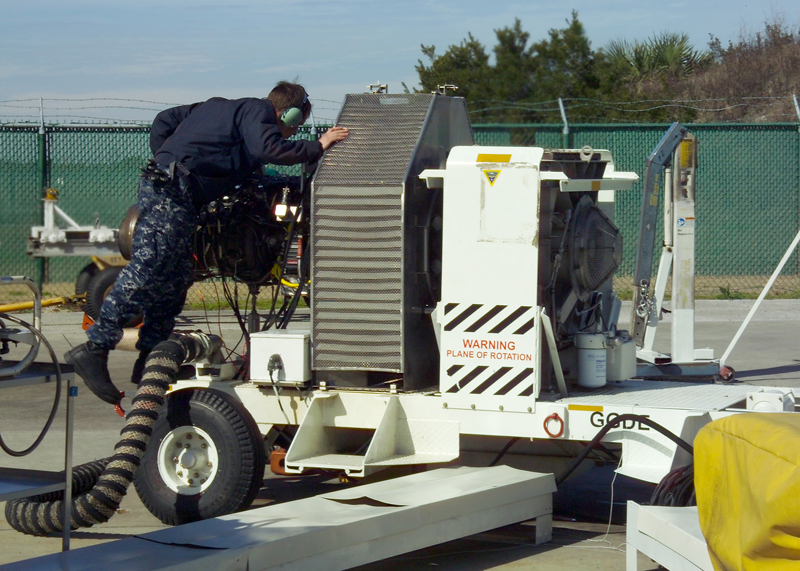
AD3 Kris Lyles checks a helicopter engine for air and oil leaks during a performance run at the FRCSE Det Mayport Engine Test Cell. (Photo by Vic Pitts)