FRCSE civilians earn GWOT Medal
“It was an intense environment, especially the first six months with incoming rockets and mortars and outgoing artillery. I had two or three very close calls,” said Jonathan B. Stafford of his 11-month deployment to Iraq as a Department of Defense (DoD) civilian employee embedded with the U.S. Army.
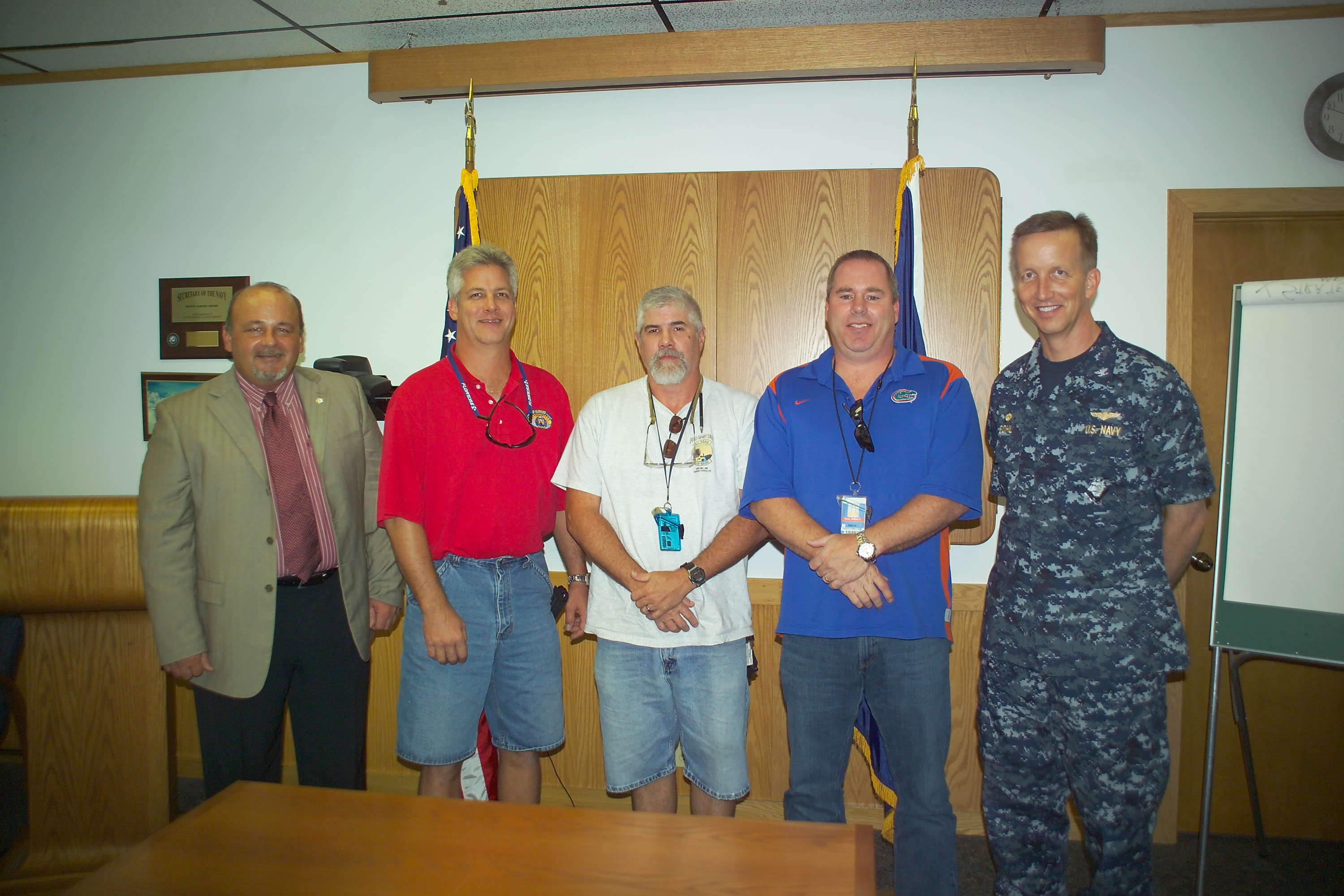
Fleet Readiness Center Southeast (FRCSE) employees Stafford, John R. Argabrite, Keith A. Presser and William E. Houk received the Global War On Terrorism (GWOT) Medal at a ceremony held Oct. 9 on Naval Air Station Jacksonville.
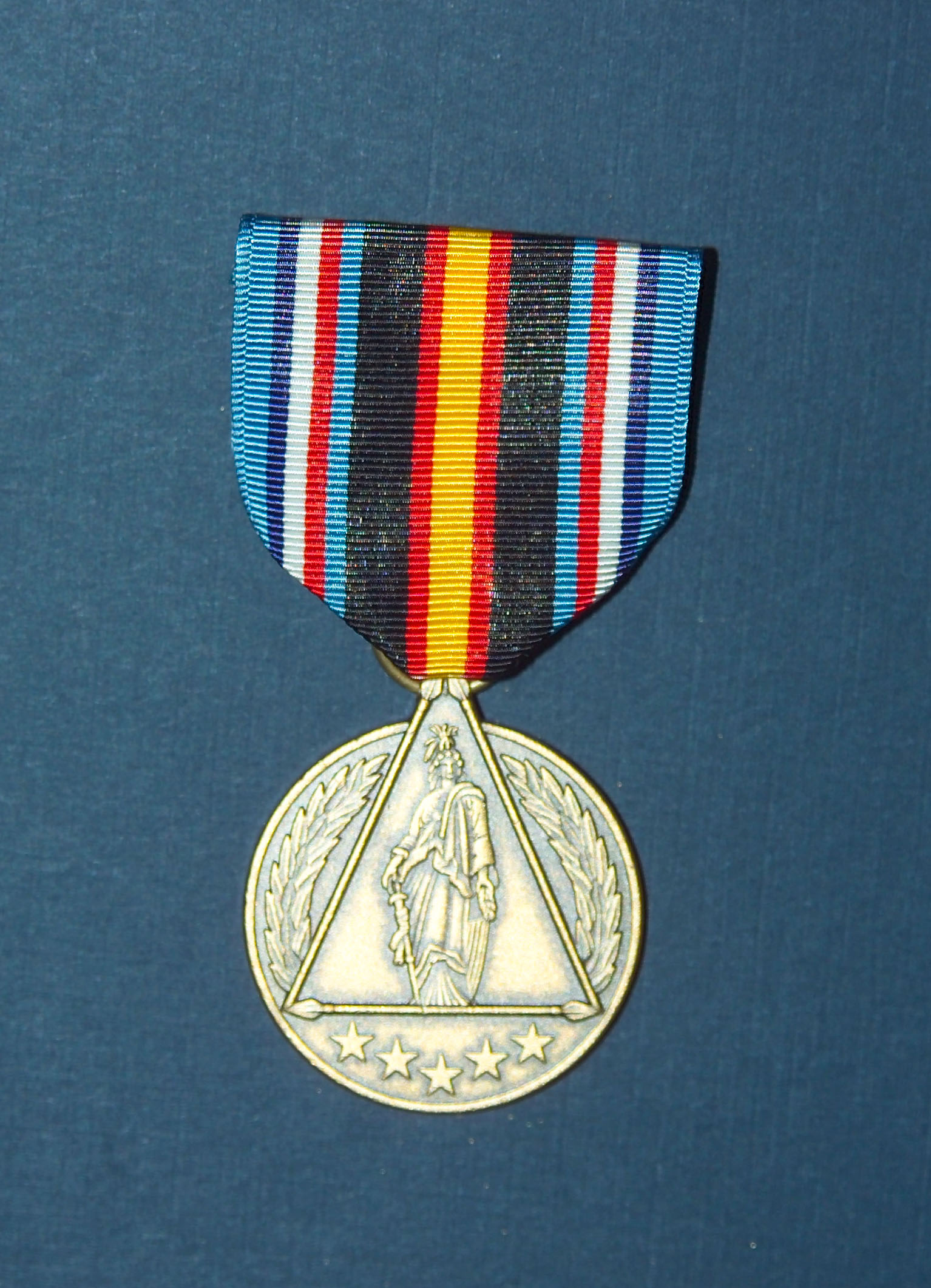
The medal recognizes and honors the vital contributions of DoD civilian employees who have served in a military campaign abroad since 2001 in direct support of Warfighters combating terrorism.
FRCSE Commanding Officer Capt. Paul Sohl who presented the medals said, “It is the continuous efforts of our people that make all the difference. They gave the extra measure, working long hours under considerable physical and mental distress.” He concluded by thanking the awardees for their service to a grateful nation.
Operations against terrorism require the special skills civilians bring. The GWOT medalists deployed independently of one another to a variety of locations. Three of the specialists provided direct support to combat troops, while another assisted the Iraqi government with humanitarian, economic and governance efforts.
FRCSE Business Specialist “Jon” Stafford served from May 2007 to April 2008 in Iraq,
35 kilometers south of Baghdad. He supported the U.S. State Department’s Provincial
Reconstruction Team (PRT) as an Industry Specialist at Forward Operating Base (FOB) Mahmudiyah. Life at the small FOB was austere and difficult at times.
Working 16 to 18 hour days, Stafford served as the Industry and Economic Advisor. He developed relationships with local tribal leaders, government officials and business owners. From his initial 90-day assessment, he concluded most of the larger factories were shuttered or barely running, primarily due to the lack of reliable electricity, poor product promotion, and inadequate markets.
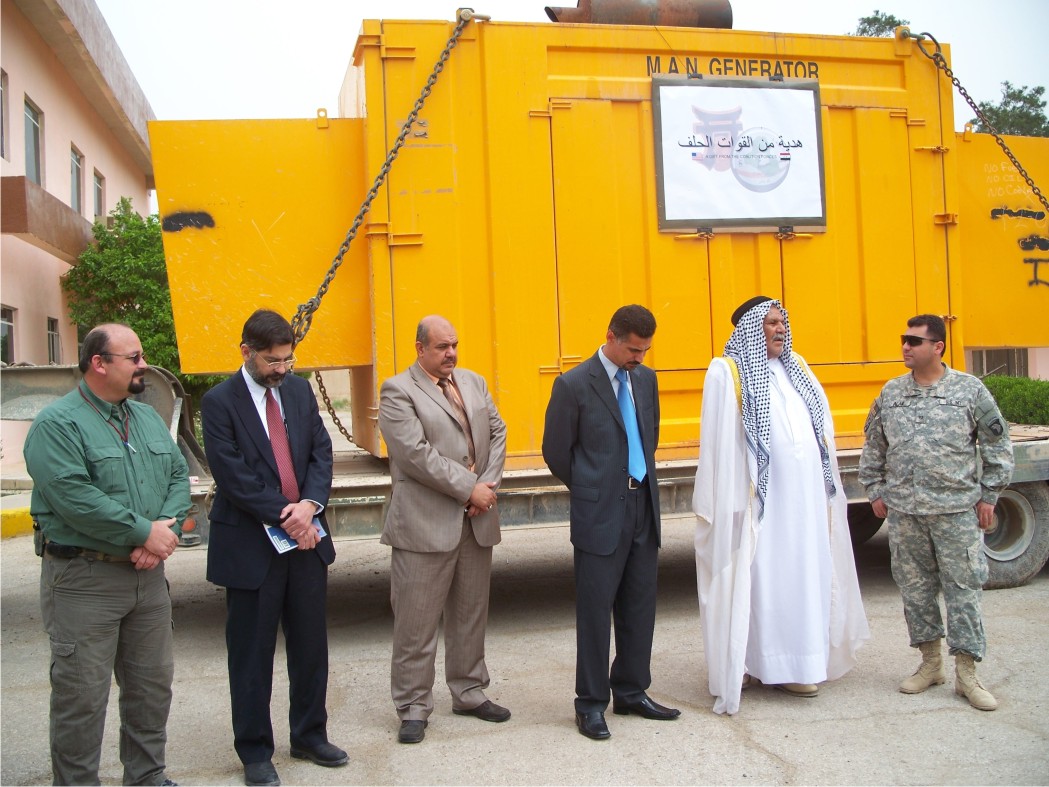
Stafford facilitated the acquisition of needed resources, including generators to keep several factories operating at full capacity. Further, he connected buyers with sellers to improve commerce and worked tirelessly to establish the Business Council for promoting economic development to spur employment and deter the threat of terrorism.
“If a person has employment to sustain himself, feed his family and envision a future, he has a better chance of resisting enticements by terrorists and thugs,” he observed. “What’s more, if a man is working, he doesn’t have time to build bombs.”
Another duty Stafford enjoyed was accompanying the American soldiers on their daily rounds to distribute donated clothing, toys, toiletries, wheelchairs and drinking water. “What the news provides doesn’t give our humanitarian efforts over there justice,” he said. “This was without a doubt the most professionally and personally rewarding experience of my life.”
GWOT medalist, machinist John Argabrite also worked in Iraq alongside troops under harsh conditions to keep critical aircraft airborne. Serving from June to September 2008 in Al Asad, he performed 50-hour recurring inspections on F/A-18 Hornet jets.
In addition, Argabrite manufactured three bearing supports for emergency transport of three CH-53 Sea Stallion helicopters to Afghanistan and performed an emergency repair of canted bulkhead locking pin bushings on an HH-60 Seahawk helicopter in Balad.
After completing the emergency repair, Argabrite hopped a Navy Seahawk HH-60H helicopter back to Al Asad. The crew had installed the only passenger seat near the door. “They only fly at night; the only light you have is from the infrared radar. It’s dark and then suddenly you see all this gold stuff coming up from the ground,” he said. “It is tracer fire.”
The two door gunners armed with rapid-fire M60 machine guns returned fire, shell casings tearing through the air. “They scared the hell out of me! I was burned by hot brass flying all over the inside of the cabin,” he reported.
In spite of working in unforgiving heat, enduring raging sandstorms and being fired upon,
Argabrite still feels his wife who remained behind in Middleburg, Fla. probably had the harder job. He said, “I want to thank my wife Lori. The pump went out, the freezer went out; she took care of it all and my kids.”
Many civilians working in federal service have been quietly contributing to the war effort since the terrorist attacks on U.S. soil in 2001. GWOT medalist Keith Presser, a Planner and Estimator, deployed twice to sustain the efforts of U.S. Warfighters.
His first 3-month tour was in support of the Western Pacific Fleet from December 2002 to February 2003 aboard the USS Constellation (CV-63) and more recently in Iraq where he provided support to Fleet Readiness Center East in Al Taqaddum from April to October 2007. He evaluated damage and planned repairs to ensure aircraft were quickly returned to operational forces.
Presser felt humbled about receiving the medal. He said, “The military guys who are over there, they deserve the thanks. It was 120 degrees in Iraq and I’m wearing regular clothes; they are wearing lots of armament not including their rifles, water and backpacks!”
When he first arrived at the Al Taqaddum Airbase, about 20 miles from Fallujah, Presser vividly recalled the blaring sirens used for signaling helicopter aircrews to prepare for immediate take-off. They provided operational support or casualty evacuations.
“It was like that movie, Mash,” he said. “They made that eerie sound.” At the beginning of his tour, the signals were sounded about seven times in a 12-hour shift. “By the time I left, we only heard about one every shift. That is how I knew conditions had improved.”
He initially agreed to a three-month tour but extended another three months, a mutual decision between Presser and his wife. He said, “My quality of life made a big difference. We weren’t taking rounds at the time.” While gone, his wife dealt with the well going dry, various auto and appliance repairs, and the death of the family dog. “I just wasn’t there to deal with it,” Presser said. “She did an outstanding job.”
Fleming Island resident William “Bill” Houk also deployed twice to Al Taqaddum, Iraq from July to November 2006 and again from December 2007 to June 2008. He supported all U.S. Marine Corps and Navy helicopter and F/A-18 squadrons throughout the region as an aircraft Planner and Estimator.
He said, “I and one other artisan took care of all the squadron’s aircraft within the compound when they returned from their missions. I researched the damages and planned out the repairs. The artisan would perform the work.”
Houk slept in a 7 by 15 foot metal can in the desert for nine months. In 2006 the fighting took place on the other side of the wire. “You’d be sleeping in your can and boom, boom, boom! The mortars and rockets would shake the ground and you would just hope they didn’t land on your can,” he said.
The next morning he would see the indentations left in the concrete from the explosions. “They were close, some less then 30 yards at times. My second tour in 2008 was much calmer,” he recalled.
DoD civilians are not only serving alongside deployed troops as part of an expeditionary force in war zones but are also helping the Iraqi and Afghan governments set up and maintain the infrastructures on which to build democratic institutions.
The Secretary of Defense GWOT medal was approved Aug. 7, 2007. It honors their service, courage and enduring sacrifice. For medal criteria, visit http://www.cpms.osd.mil/ASSETS/CFBC63F7A7CA49389F0C4050790163EF/Documen…
//USN//
10-06A:
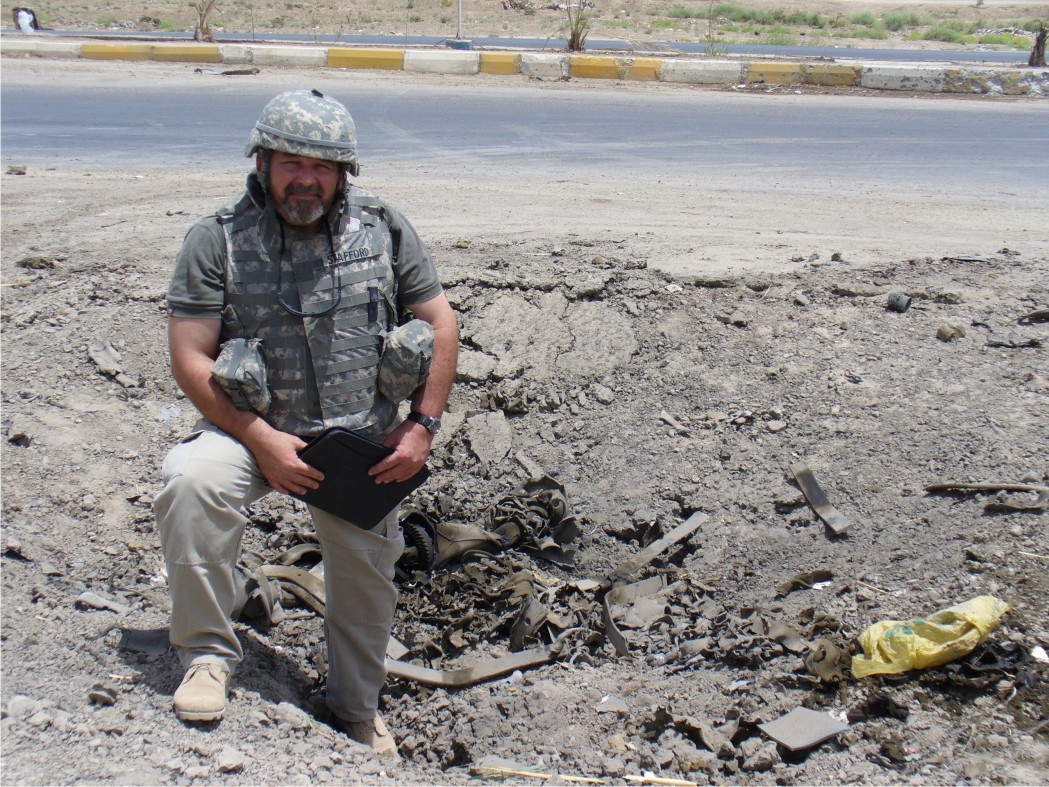
DoD civilian Jon Stafford assesses the damage left by a car bomb detonated in front of an ice factory in Mahmudiyah, Iraq. Embedded with the U.S. Army, he served for 11 months at a Forward Operating Base (FOB) with the U.S. State Department’s Provincial Reconstruction Team (PRT) as an Industry Specialist. (Photo courtesy of Jon Stafford)
10-06B:
Industry and economic advisor Jon Stafford (far left) assisted tribal and business leaders in Mahmudiyah, Iraq with the acquisition of several generators gifted by the Coalition Forces to keep local factories running at full capacity. (Photo courtesy of Jon Stafford)
10-06C:
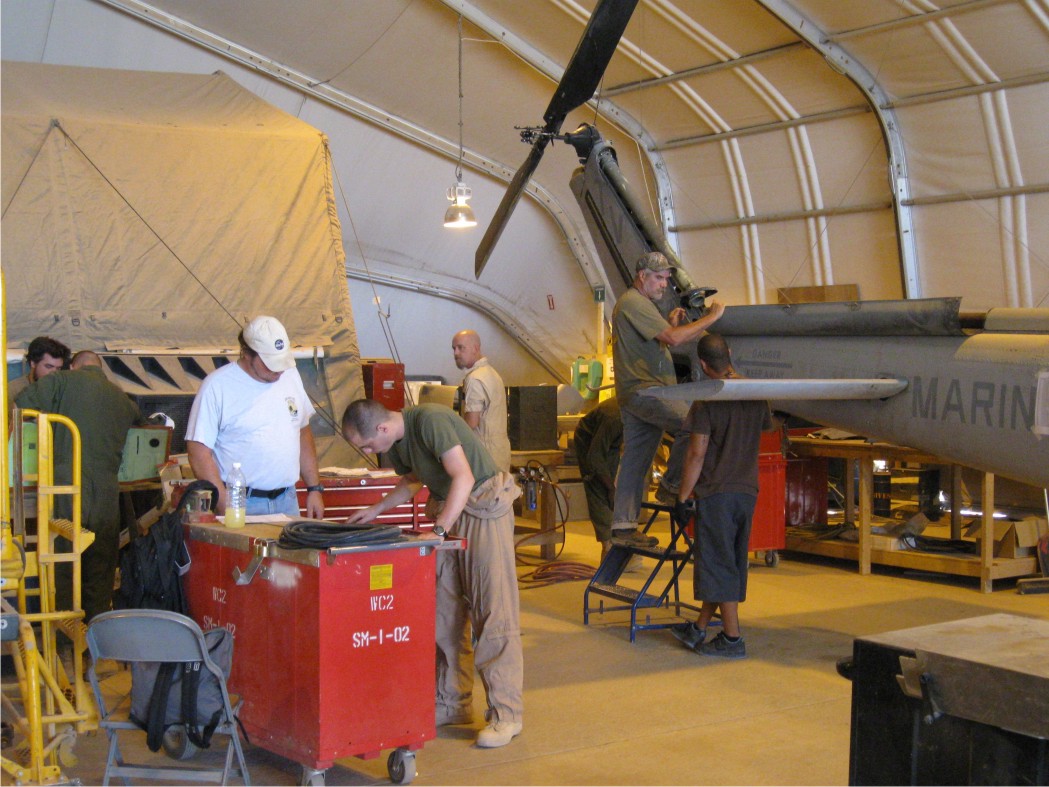
FRCSE artisan John Argabrite (far right) who deployed to Iraq in 2008 repairs the tail rotor shaft on a Marine UAH-1H Cobra Helicopter in Al Asad. (Photo courtesy of John Argabrite)
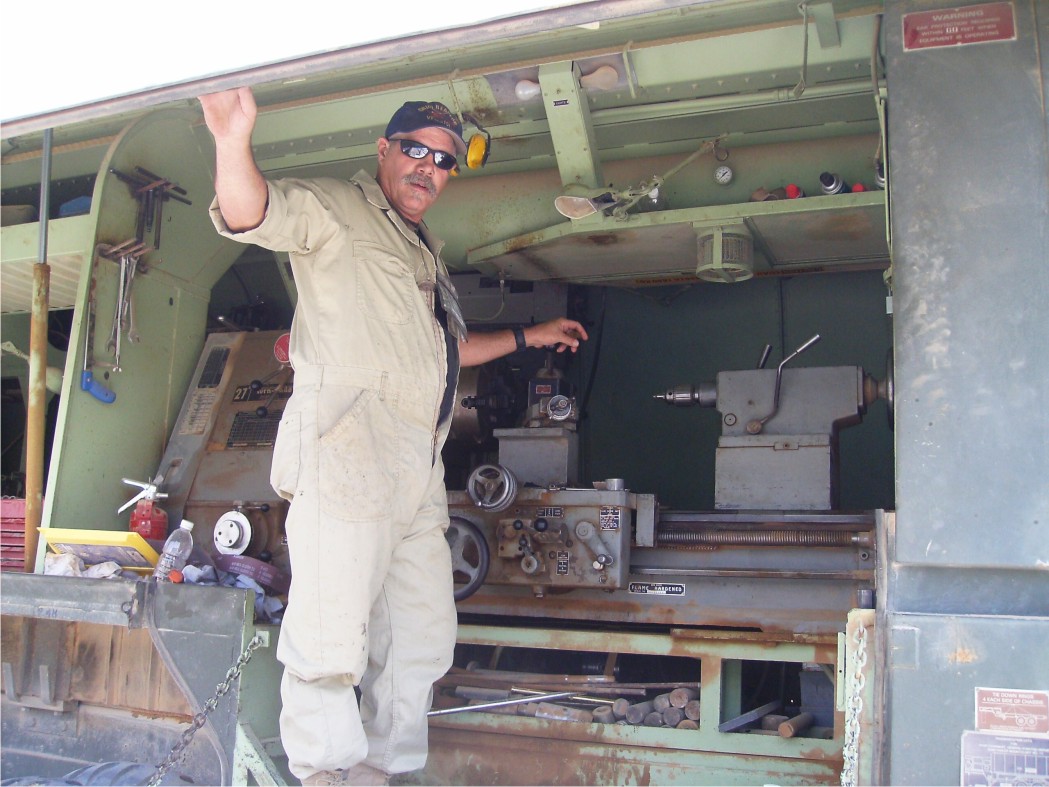
10-06D: Machinist John Argabrite uses a self-contained maintenance unit borrowed from the Seabees to manufacture aircraft parts for field service in Iraq. His four-month deployment as a DoD civilian in 2008 earned him the Global War On Terrorism Medal. (Photo courtesy of John Argabrite)
10-06E:
The Secretary of Defense Global War On Terrorism (GWOT) Medal was approved Aug. 7, 2007 for DoD civilians who have served in combat zones since 2001 in direct support of U.S. troops. The medal recognizes their significant contributions and accomplishments in support of the Warfighter. (Photo by AT1 Mark Whittlesey)
10-06F: FRCSE civilians (left to right) Jonathan Stafford, Keith Presser, John Argabrite and Bill Houk receive the Global War On Terrorism Medal presented by Commanding Officer Capt. Paul Sohl (far right) at a ceremony held Oct. 9 on Naval Air Station Jacksonville. The medalists deployed to war zones in direct support of combat troops. (Photo by Vic Pitts)
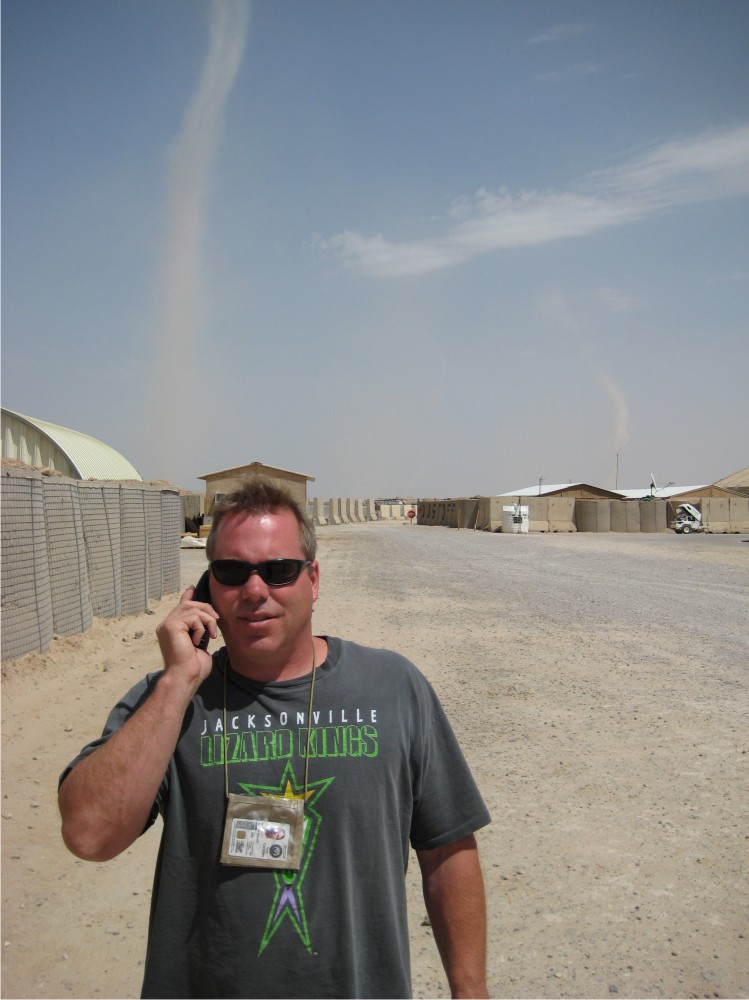
10-06G: During his tour to Iraq in 2008, Bill Houk talks with his wife back in the states as two sand tornados form in the distance. (Photo courtesy of Bill Houk)
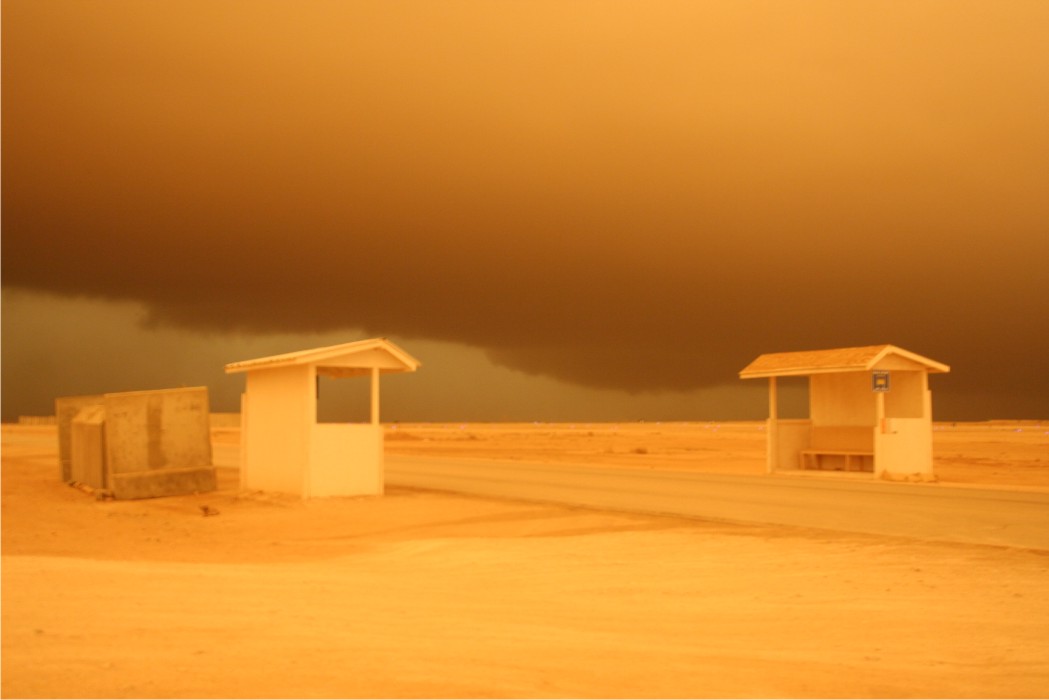
10-06H: Sandstorms are a common occurrence in Al Asad, Iraq. Sand permeates the aircraft, the hangars and the artisan’s sleeping quarters leaving a fine dusting over everything. (Photo courtesy of Jon Stafford)
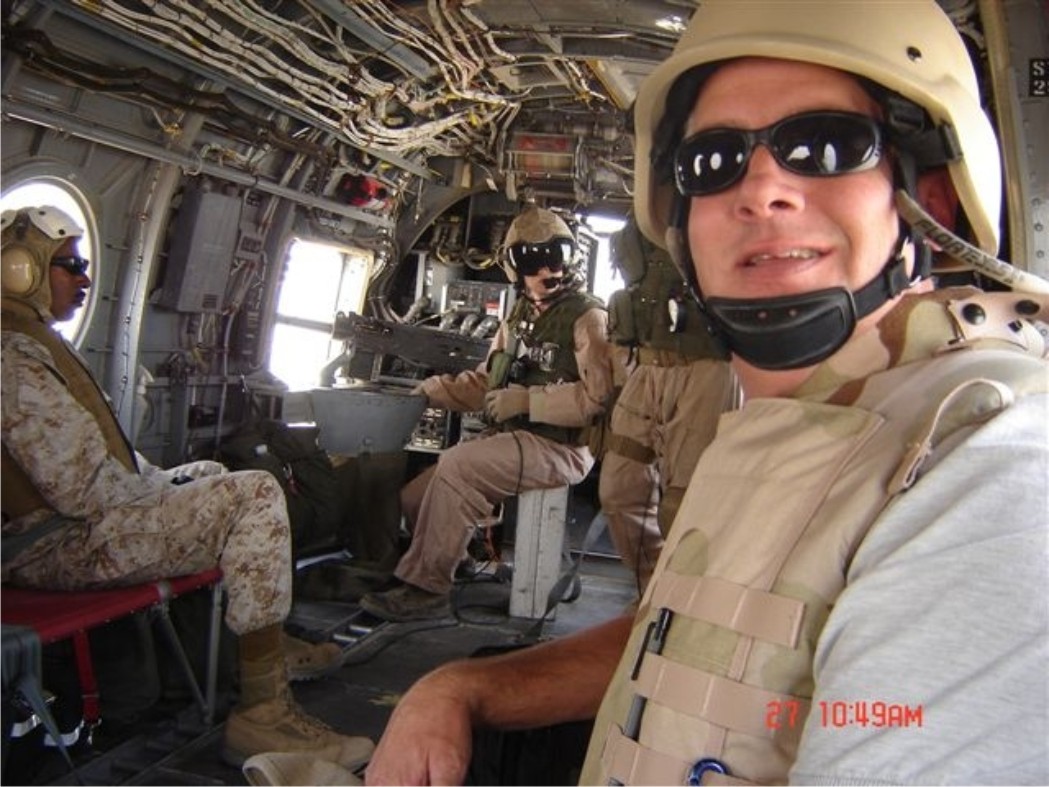
10-06I: Keith Presser hops a ride on a Marine CH-46 Sea Knight helicopter to Al Qa’im, Iraq, a mile from the Syrian border to evaluate damage to an AH1-W Cobra helicopter in June 2007. (Photo courtesy of Keith Presser)