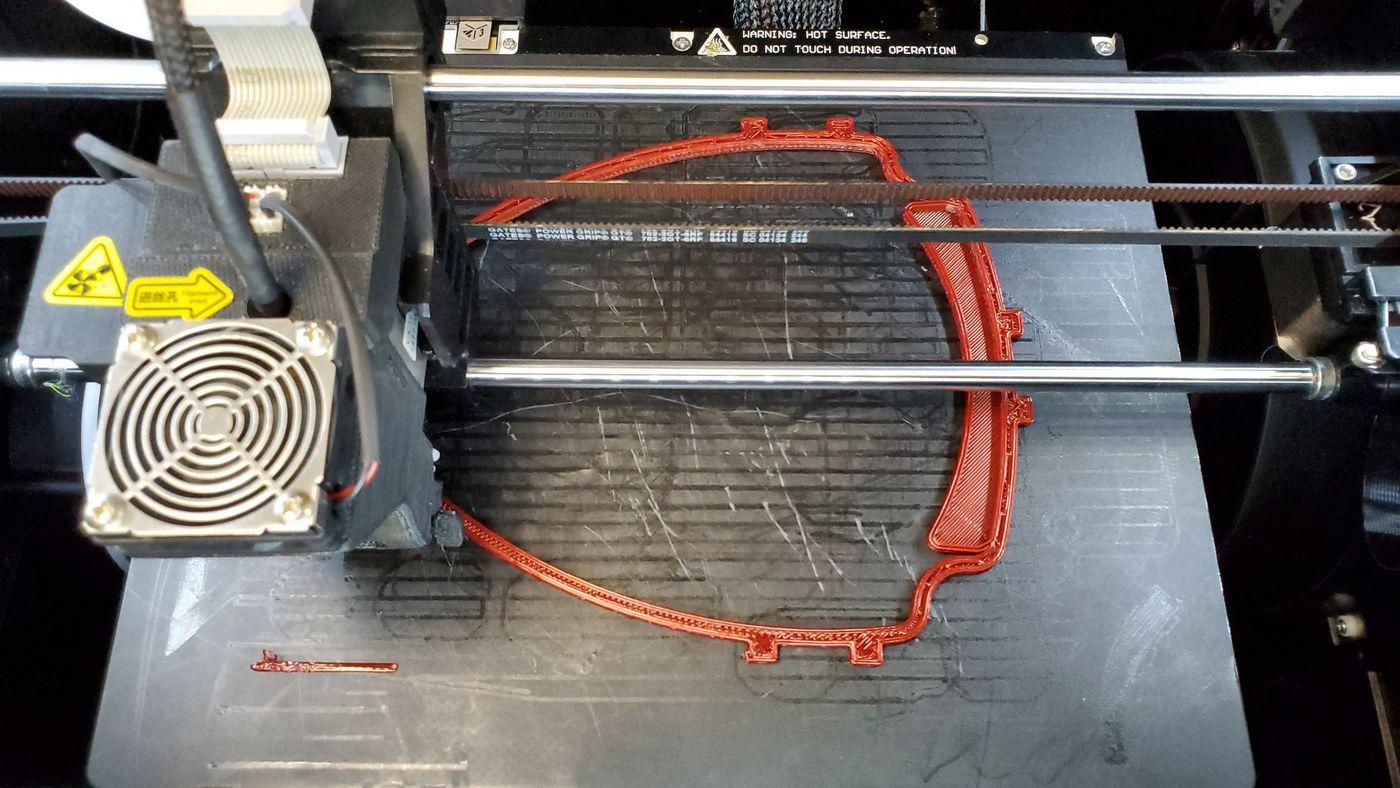
Chief Allen's at home 3D printer, used to make face shields and delivered to a local hospital.
COMFRC volunteerism rises amid COVID-19 pandemic
Fleet Readiness Center employees worldwide are using their expertise and personal resources to provide product and services to healthcare and other essential workers in the fight against COVID-19.
Employees assigned to Commander, Fleet Readiness Center (COMFRC) headquarters, Patuxent River, Md., and Fleet Readiness Centers around the globe are rising to the occasion, providing products and services to essential workers and those in need during this difficult time.
“Our community heroes are doing so much,” Adrienne Somerville, COMFRC acquisition group lead said. “This is just a small token of my gratitude,” referring to meals she dropped off to the St. Mary’s County Sheriff’s office.
In the last year, COMFRC employees have logged more than 2,000 community service hours, with an average 200 hours per month. Organizations that benefit include the local volunteer fire departments and rescue squads in Southern Maryland, Special Olympics, and mentoring and tutoring assistance for local youth, just to name a few. Roy Harris, COMFRC Executive Director commended them for stepping up to the challenges posed by current events and said they exemplified the can-do spirit of National Volunteer Month.
”Current events are bringing the FRCs’ strong volunteer spirit to the forefront,” Harris said. “They are applying the same ingenuity and passion they bring to the maintenance, repair and overhaul of naval aviation aircraft.”
One such Sailor is Chief Petty Officer Christopher Allen, an aviation electronics technician and the COMFRC volunteer coordinator. Using his 3D printer, Allen made 22 face shields for the local hospital so far. “I own a nylon 3D printer and plan to make more,” said Allen. “I’ve been dropping them off to the staff out in front of the hospital.”
Brandy Worley, part of the Command Operations Group, is making headbands with buttons so healthcare workers can loop their masks around the buttons instead of behind their ears. “Many of these folks were getting sores behind their ears because of the constant wearing of their masks,” Worley said. “So far, I have been able to help 690 individuals, spanning Maryland, Washington, D.C., New Hampshire, Florida and Tennessee. I have another 300-500 to finish as they all already have homes waiting for them.”
Healthcare workers have also been on the receiving end of efforts by information technology specialists Ric Hepler and Amanda Figart. Helper has been delivering masks made by his mother to local medical facilities. Figart has been making and delivering lunches to hospitals and first responders.
“The generous donations and support from the community has been appreciated by our staff,” Katie Peacher, interim director of MedStar St. Mary’s Emergency Department. “The generosity of the community has inspired us to also give back, and a group of individuals from our department has been gathering supplies and food to give to several families in the community affected by the crisis.”
COMFRC volunteerism extends beyond healthcare workers to local food pantries as well.
Jackie Norris-Johnston, financial management analyst, donated and delivered food to local food banks and to St. Mary’s Caring Soup Kitchen and The Mission to support their pantry and meal distribution. Penny Cox, who works at Fleet Readiness Center Southwest in California donated food for the homeless.
“It probably goes without saying, but remember to check in on your elderly neighbors or single parents who cannot get out to get what they need,” said Dwayne Oglesby, logistics manager. Oglesby regularly picks up groceries for an elderly neighbor and bought a box of diapers for a single mother who was laid off last month.
Because the pandemic has decreased social interaction, Allen said it’s important to connect with others, using technology as a means to do so. For example, he said, he continues to host weekly Cub Scout and Girl Scout meetings via Zoom.“I meet with my Cub Scouts once every two weeks and have also hosted a pack-wide Zoom meeting that had 75 scout attendees and their families. We sang songs, showed pre-recorded skits and jokes, and announced future summer camping…hopefully.
We’ve hosted weekly virtual meetings and “pre-recorded” meetings for the Girl Scouts, teaching them about space exploration, astronomy, and art from nature. More than 1,000 Girl Scouts across the country attended the first virtual meeting.”
Other volunteers are utilizing technologies, such as Zoom and Facebook Live for virtual religious study groups, to connect with veterans and offer fitness and health tips.
“We often get so wrapped up in our own lives with work and families. In an odd way, this pandemic has given us a reason to connect on a deeper level with our family, friends and community,” Allen said. “If there is a silver lining, this is it.”
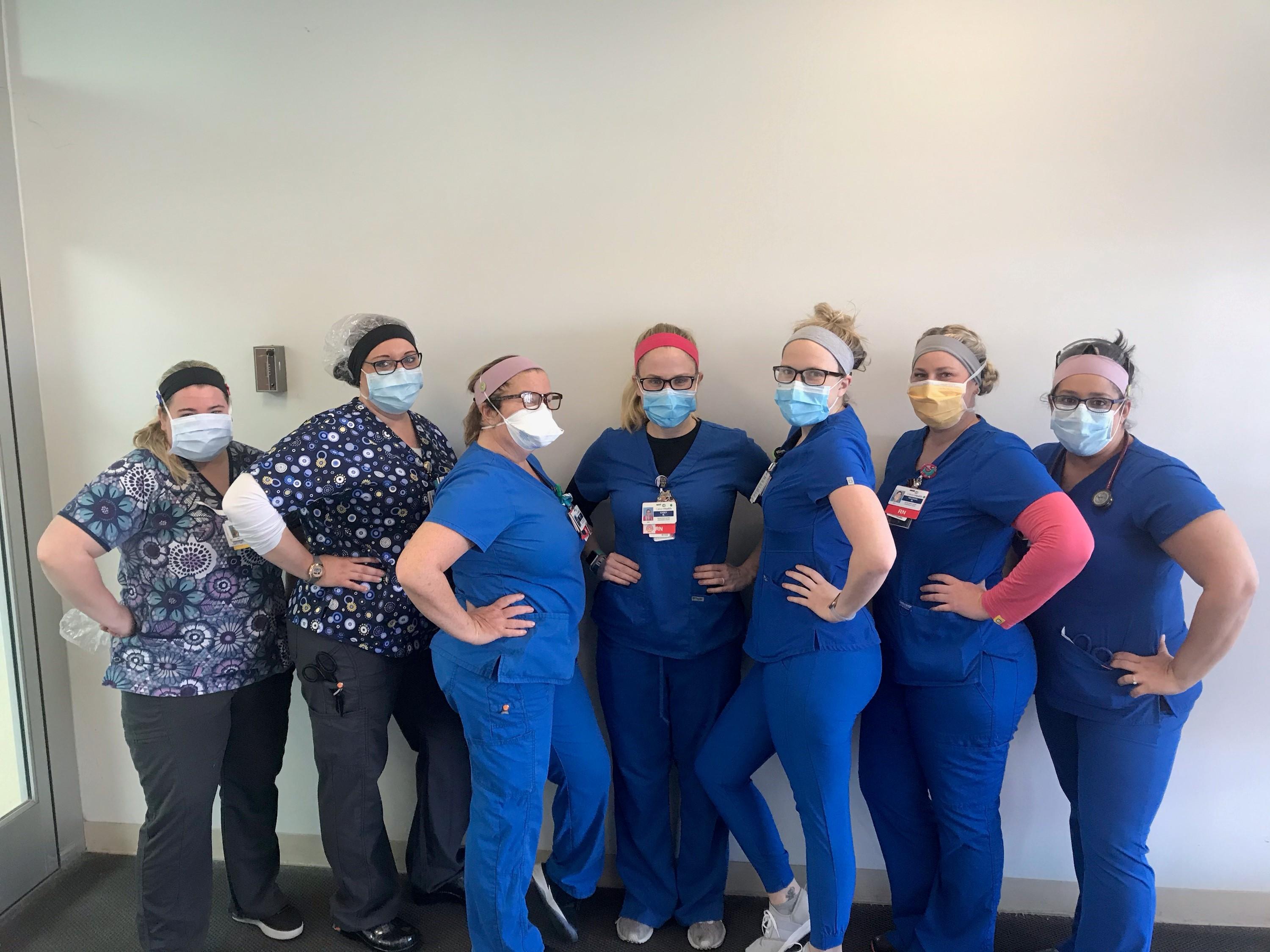
Employees at the local hospital sport "button headbands," used to securely anchor face masks. Headbands were made by Brandy Worley, COMFRC Command Operations.